

Isamu Wakabayashi-The Garden of the Museum of Modern Art, Seibu Takanawa, Karuizawa
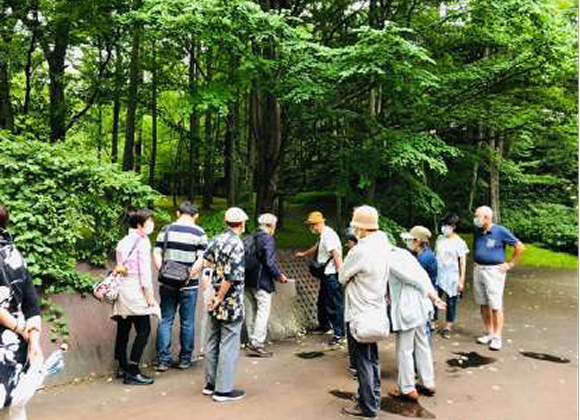
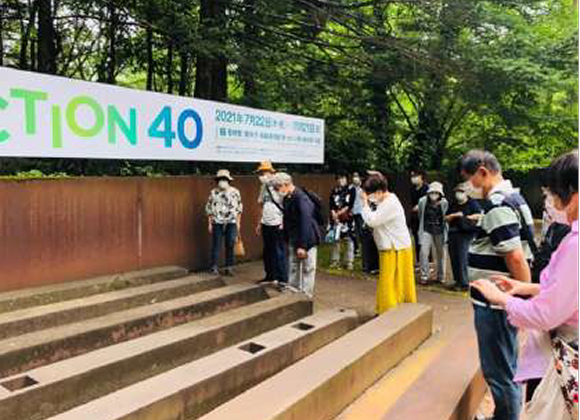
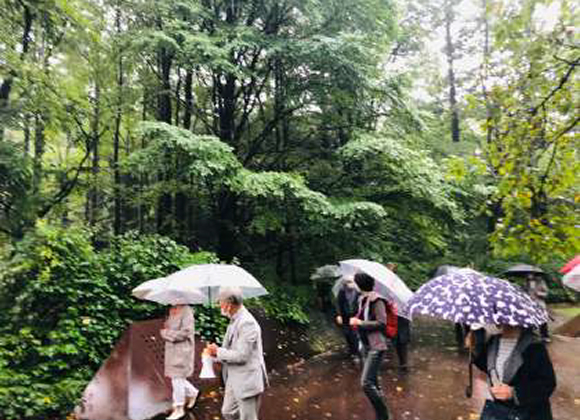
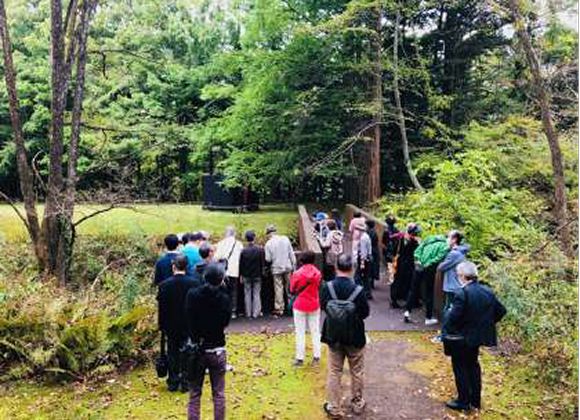
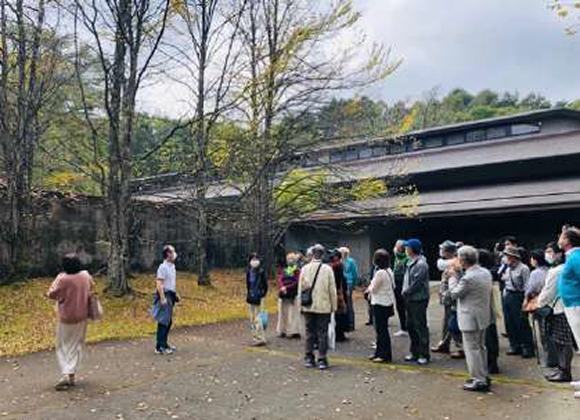
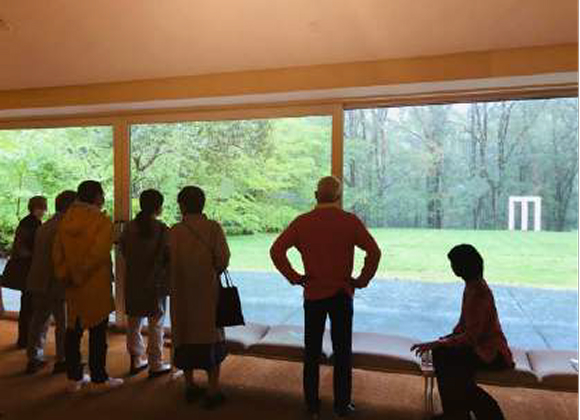
In conjunction with the exhibition Isamu Wakabayashi: The Garden of the Karuizawa Takanawa Museum of Art (now the Sezon Museum of Modern Art), held from July 22 to November 21, 2021, a garden tour entitled Sculptor Isamu Wakabayashi and the Garden of the Museum of Modern Art, Takanawa Karuizawa was organized. The tour was led by Shogo Yamamoto (President, Seisaku Bijutsu Kenkyujo Co., Ltd.), who had worked alongside Wakabayashi on the creation of the museum garden. Drawing upon archival materials and photographs exhibited in the exhibition, records of the garden tour, and image materials related to the garden’s construction preserved by the museum, this essay examines Wakabayashi’s vision for the garden.
Wakabayashi’s garden project originated from the vision of Seiji Tsutsumi, founder of the Sezon Museum of Modern Art. Yamamoto first became involved through assisting with the fabrication of metal structures for Bar Radio, a pioneering space that integrated commercial design and contemporary art. Designed by Wakabayashi and Takashi Sugimoto (Super Potato), the venue opened in Jingumae, Tokyo, in 1972. Through conversations with Wakabayashi during this project, Yamamoto eventually joined the museum garden initiative.
Yamamoto joined the garden project around 1982 together with Motoko Hayashi, one of Wakabayashi’s assistants. Through repeated welding experiments and prototypes, they worked closely with Wakabayashi to develop the garden’s steel structures and details. After approximately four months of intensive construction in 1985, the garden was completed.
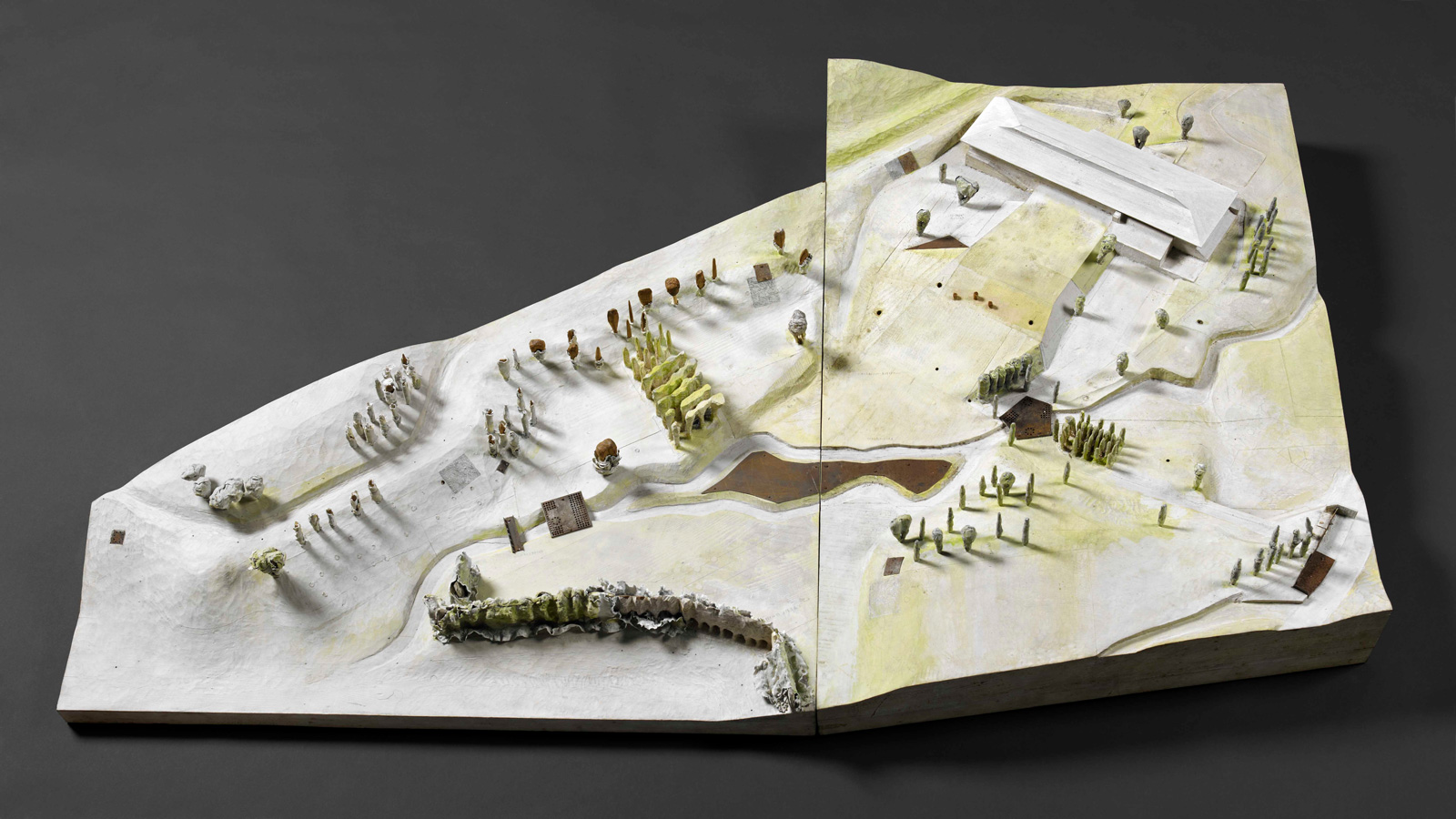
The Takanawa Museum of Art (now the Sezon Museum of Modern Art) opened in 1981, and Wakabayashi began conducting site surveys in Karuizawa the following year. Subsequent research trips to Himeji, Kyoto, and Ise Grand Shrine*1—whose spatial openness toward the surrounding landscape served as an important model—contributed to the development of the project. In 1983, Wakabayashi submitted an intermediate-scale model of the garden to Seibu*2.
According to On the Renovation of the Takanawa Museum of Art Garden*3(prepared by the Takanawa Museum of Art Foundation), several issues were identified in the existing garden prior to its redevelopment:
・A closed and inward-looking atmosphere resulting from a nature-oriented garden design
・A disconnect between the strolling-style Japanese garden and the museum’s conceptual framework
・Nearly half of the site remaining undeveloped or inadequately maintained
・A lack of suitable space for the display of outdoor sculpture
The document also proposed the following guiding principles for the redevelopment:
・From a closed space to an open space
・From an arbitrary space to an intentional space
・The establishment of an intellectual environment serving as a center of cultural activity
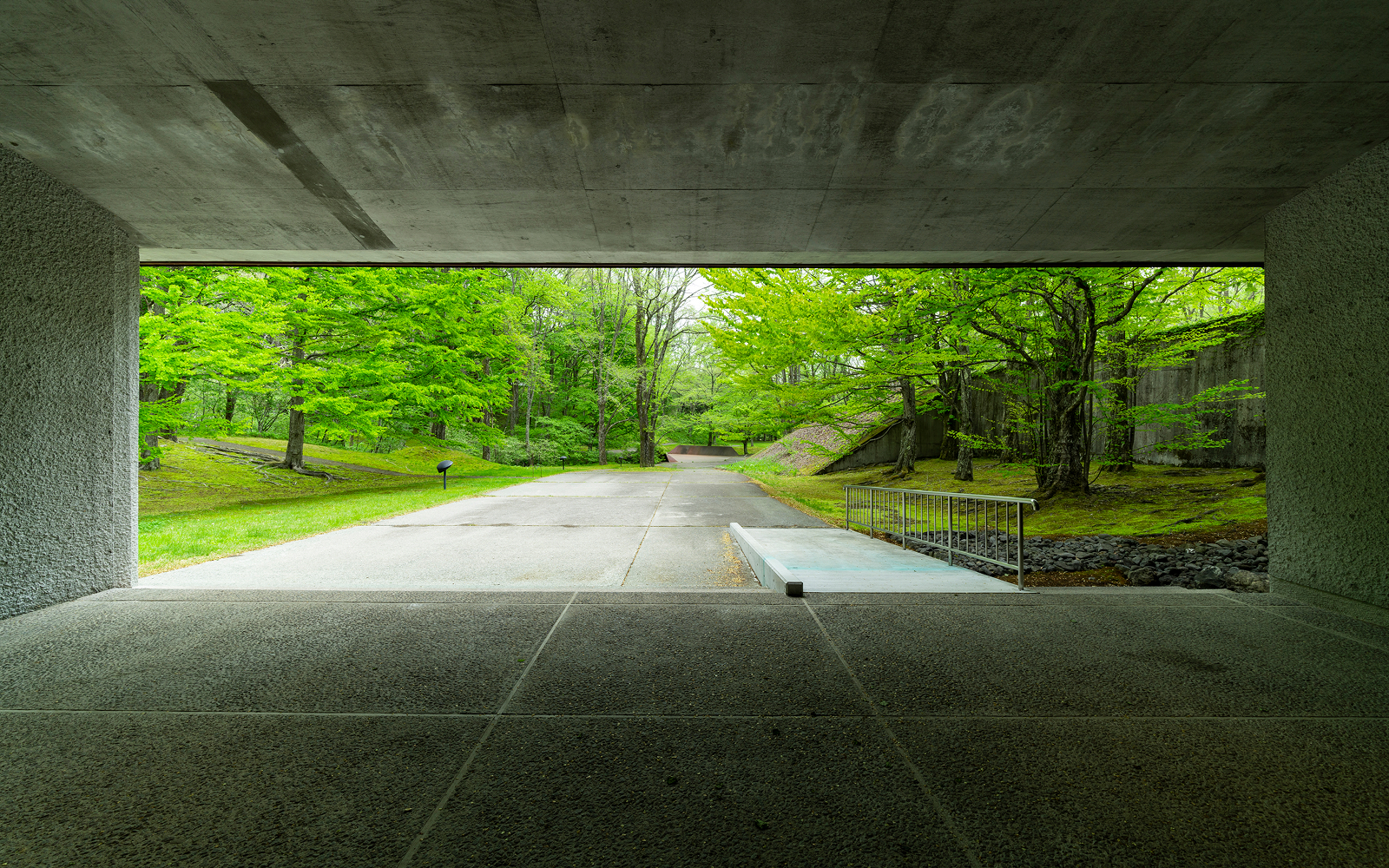
Karuizawa (now the Sezon Museum of Modern Art), 1984
Photo: Tadasu Yamamoto ©WAKABAYASHI STUDIO
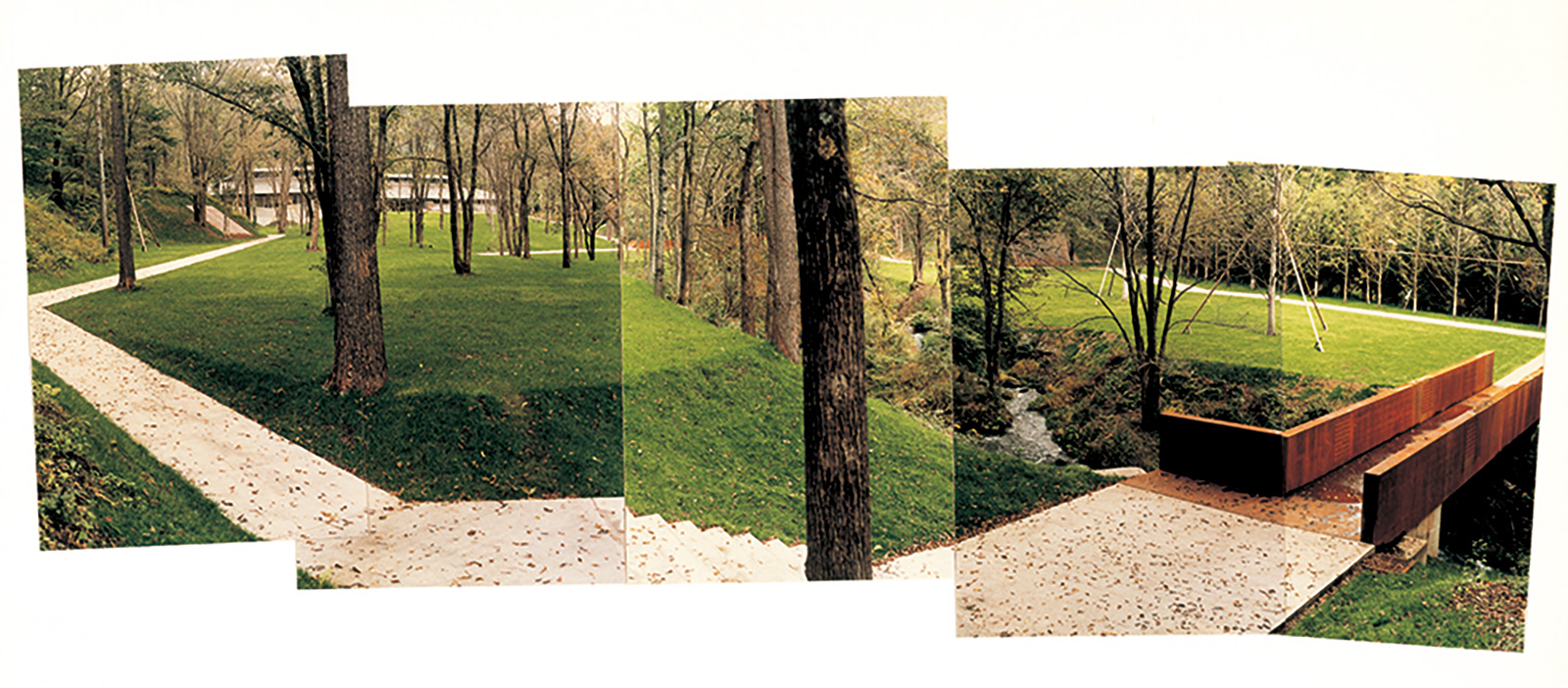
In contrast to the previous garden—characterized by the dark and enclosed atmosphere of a long, narrow depression running alongside the stream, and by a largely untouched landscape through which only a circulation path had been introduced—the new garden was conceived as a more open and expansive environment. As a garden for a museum of contemporary art, it sought to become “a garden shaped by a sculptural will” and to be transformed into “a garden that harmonizes the grandeur of nature overlooking Mount Asama with forms embodying the will of people living in the present.”*4 This vision established a concept that clearly distinguished the project from the conventions of a traditional Japanese garden.
Karuizawa is situated on a plateau at an elevation of approximately 900–1,000 meters on the southeastern slope of Mount Asama (2,568 meters above sea level). The image of Mount Asama’s foothills became a central principle in Wakabayashi’s approach to garden design. He regarded the museum’s varied slopes and inclines as extensions of the mountain’s vast and rugged natural environment. As Wakabayashi explained, “The angle of the foothills formed by the accumulation of Mount Asama’s volcanic deposits is 17 degrees. The surrounding terraces, where vegetation takes root and water erodes the land, generally have slopes of about 30 degrees. These are the angles that stabilize the local terrain.”*5 The garden was therefore shaped on the basis of these natural gradients and landforms.
© WAKABAYASHI STUDIO
- “‘Gendai no Niwa’ no Sakigake: ‘Hakoniwa’ Jokyo o Yaburu Wakabayashi Isamu no Kokoromi,” Mainichi Shimbun (Evening Edition), September 9, 1985.
- Isamu Wakabayashi, “On the Renovation of the Garden of Karuizawa Takanawa Museum of Art,” November 24, 1982.
- “On the Renovation of the Takanawa Museum of Art Garden” (document prepared by the Takanawa Museum of Art Foundation), c. 1983.
- Ibid.
- See note 1.
1981
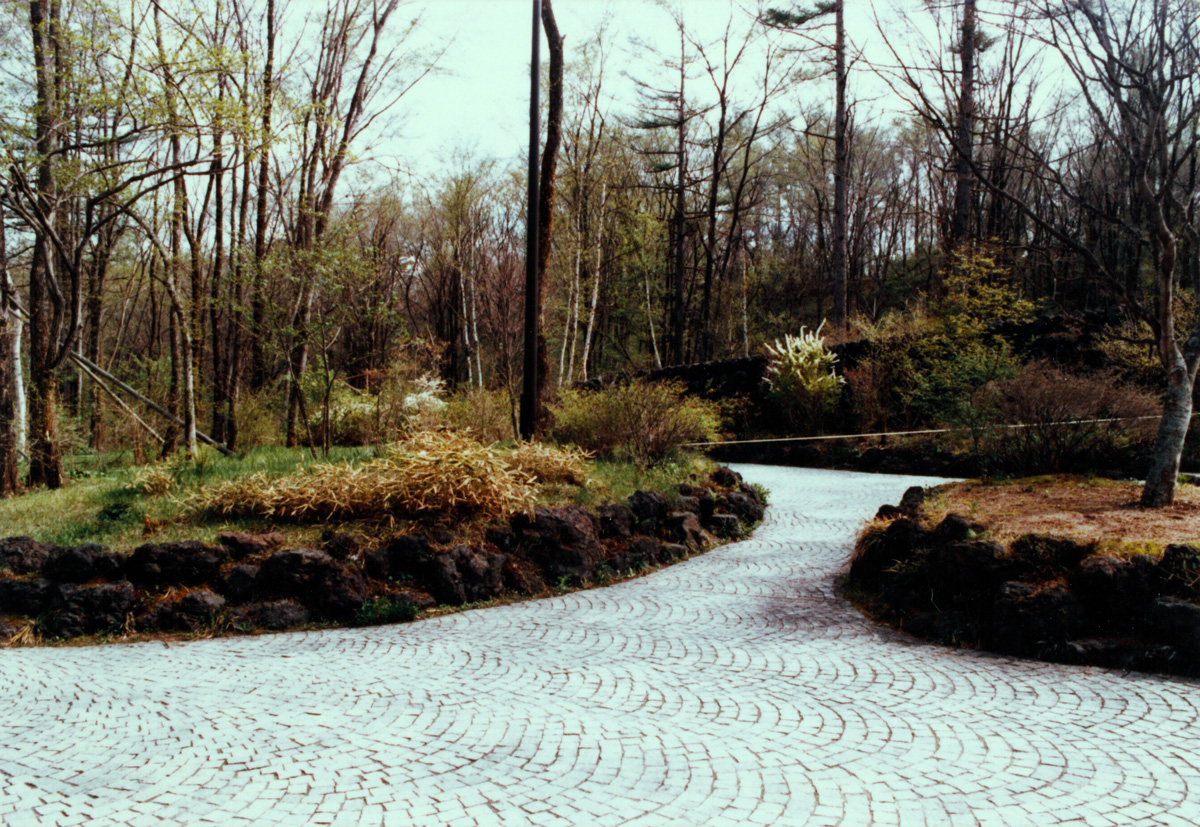
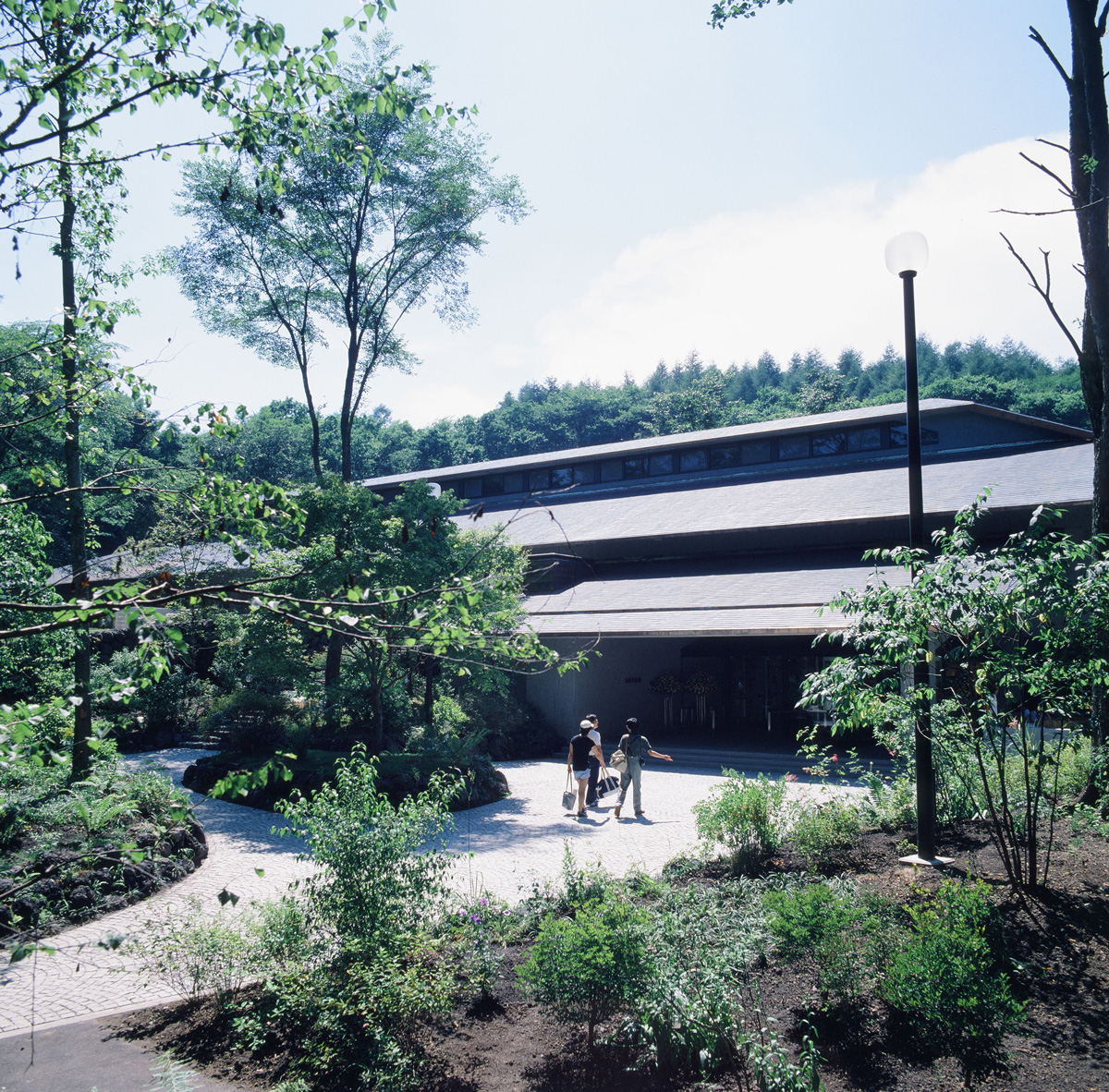
Museum exterior at the time of its opening Photo: Norihiko Matsumoto
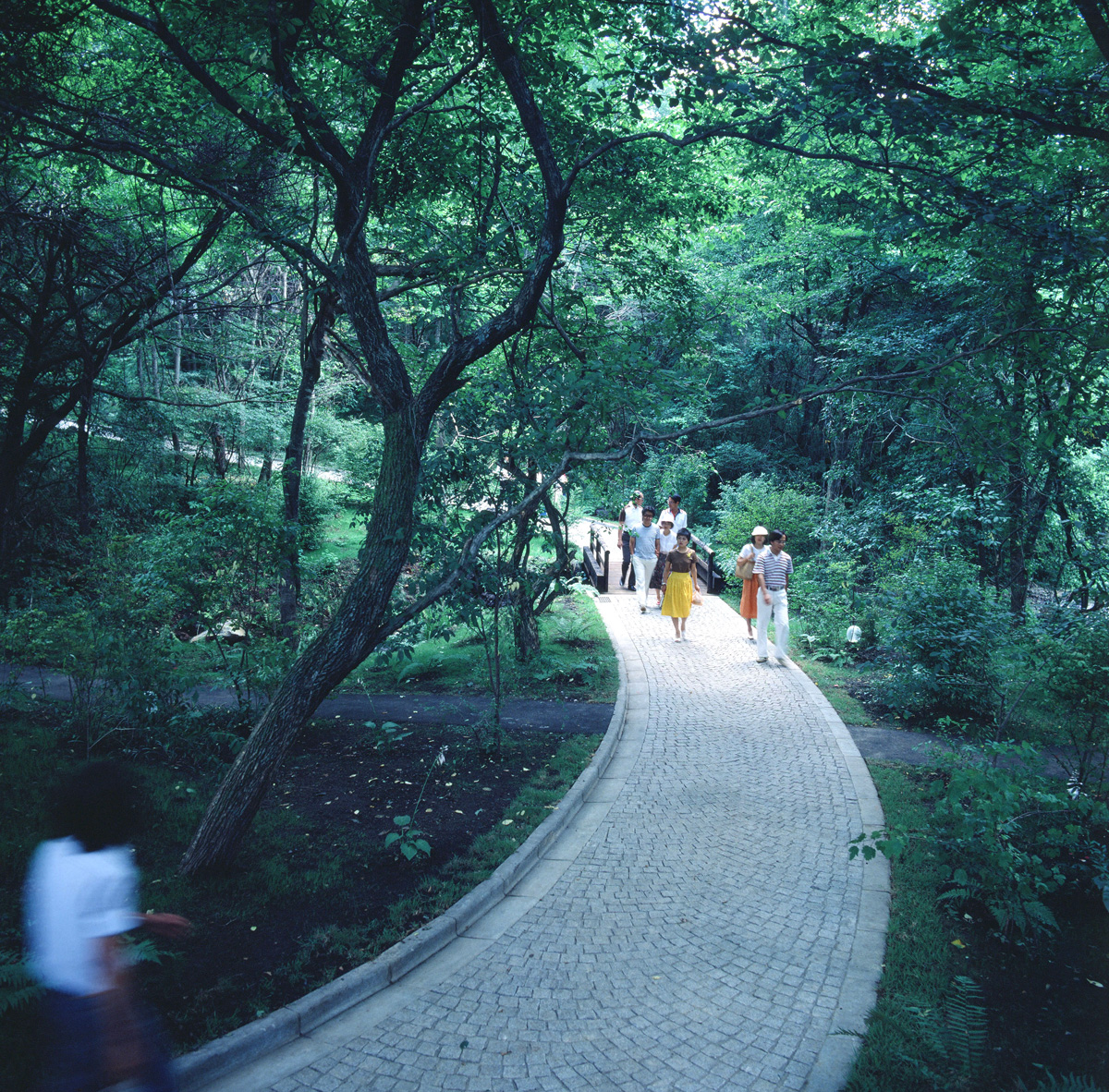
Garden promenade at the time of its opening Photo: Norihiko Matsumoto
1985
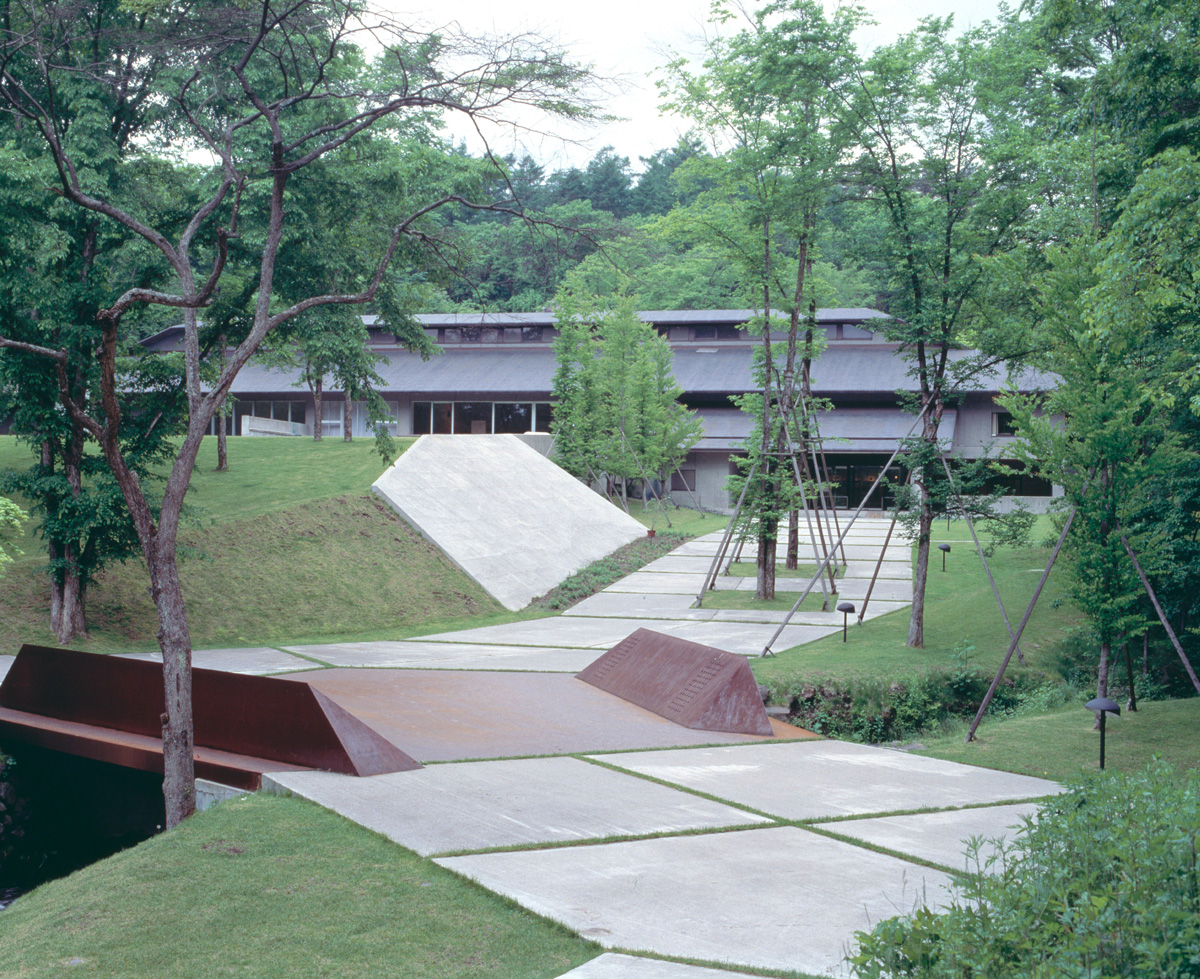
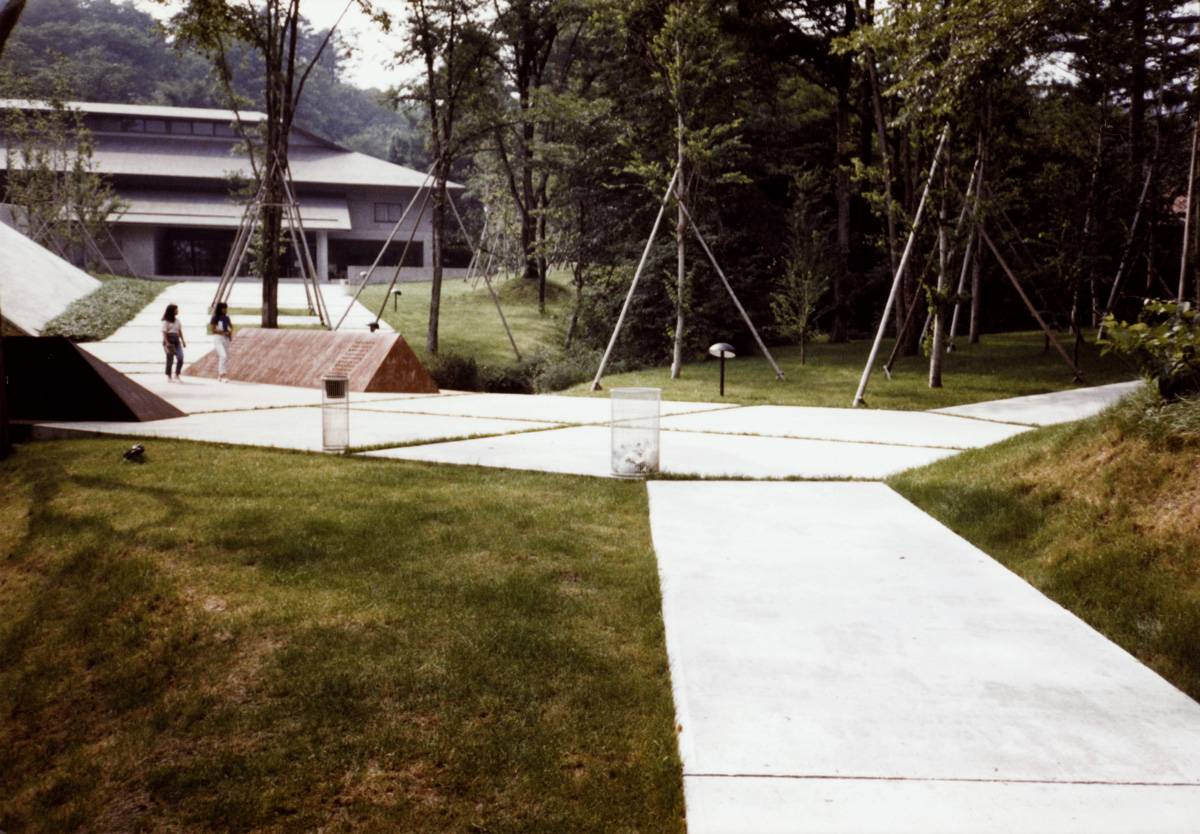
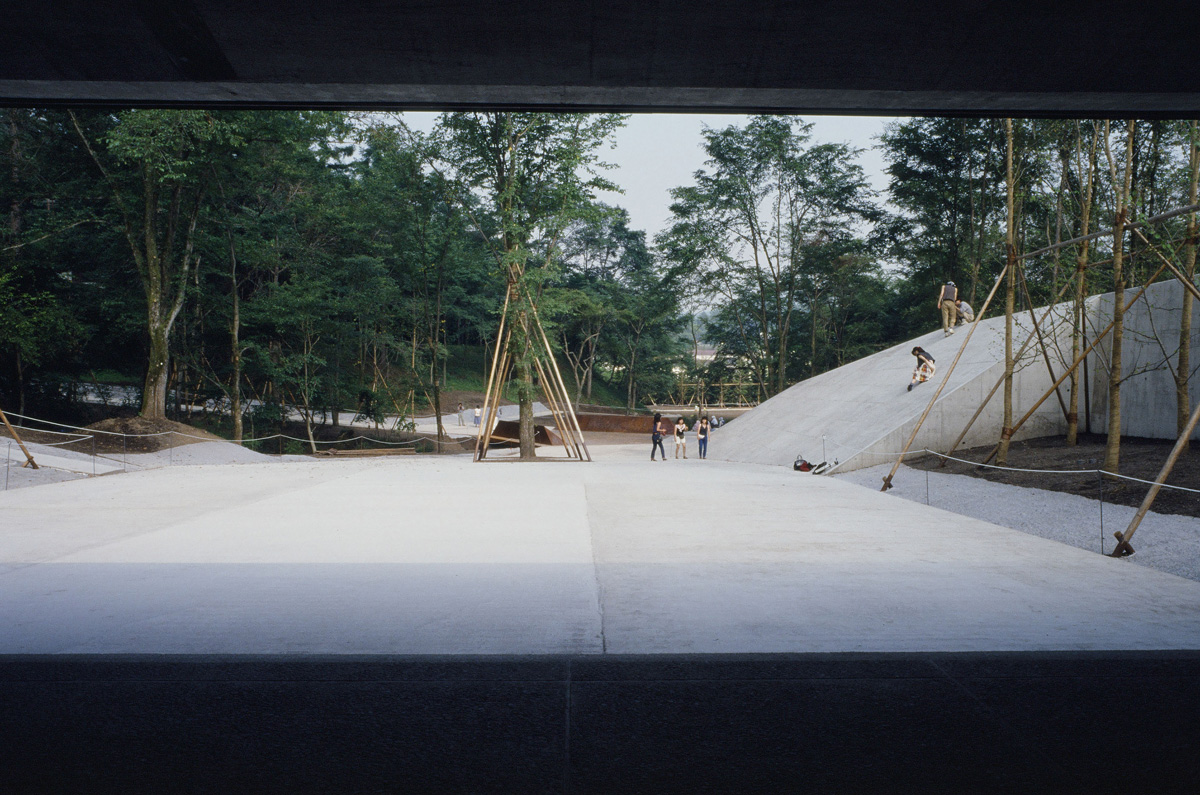
In order to create “a kind of tactile experience” through walking across the terrain and its slopes, and to foster “an atmosphere of gentle movement throughout the garden, one that sensitively captures the flow of wind and water while incorporating plants, stones, metal, and the surrounding landscape,”*6 Wakabayashi sought to make full use of the site’s natural characteristics. He clearly distinguished between areas to be preserved in their existing state and those to be sculpturally developed, envisioning a garden that would maintain an overall sense of harmony.
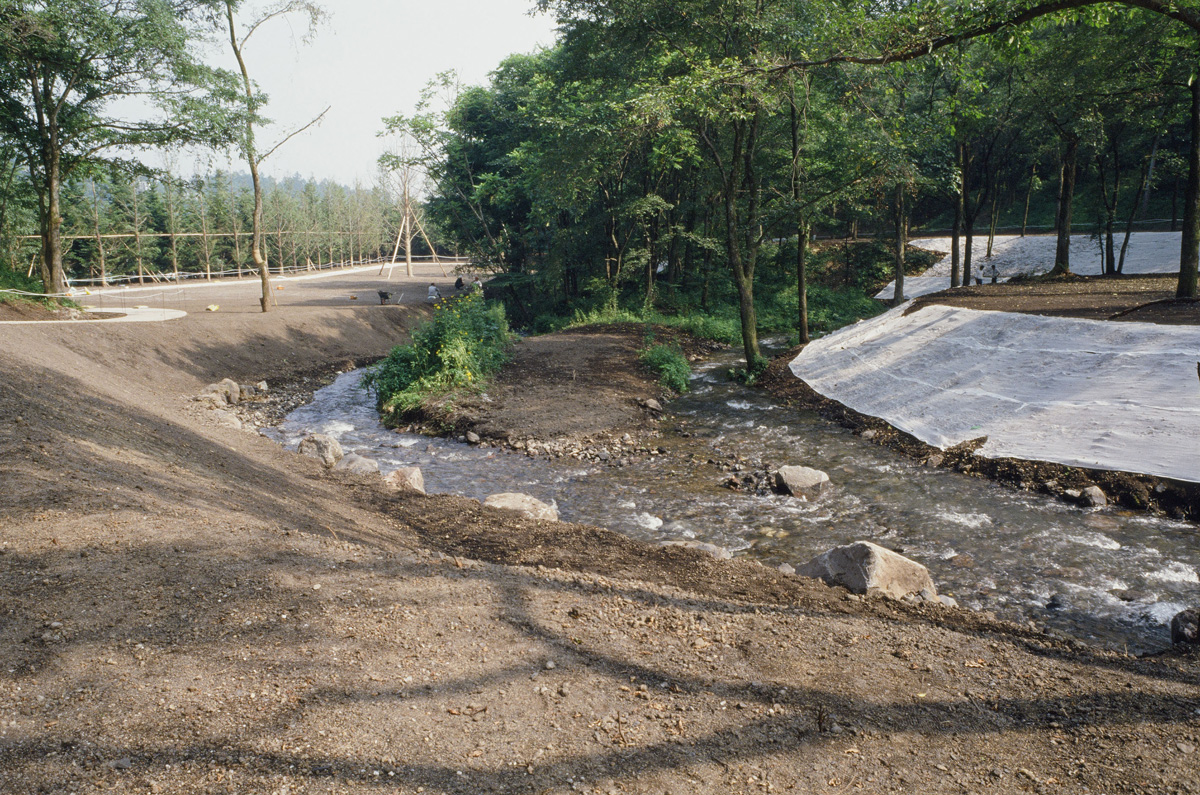
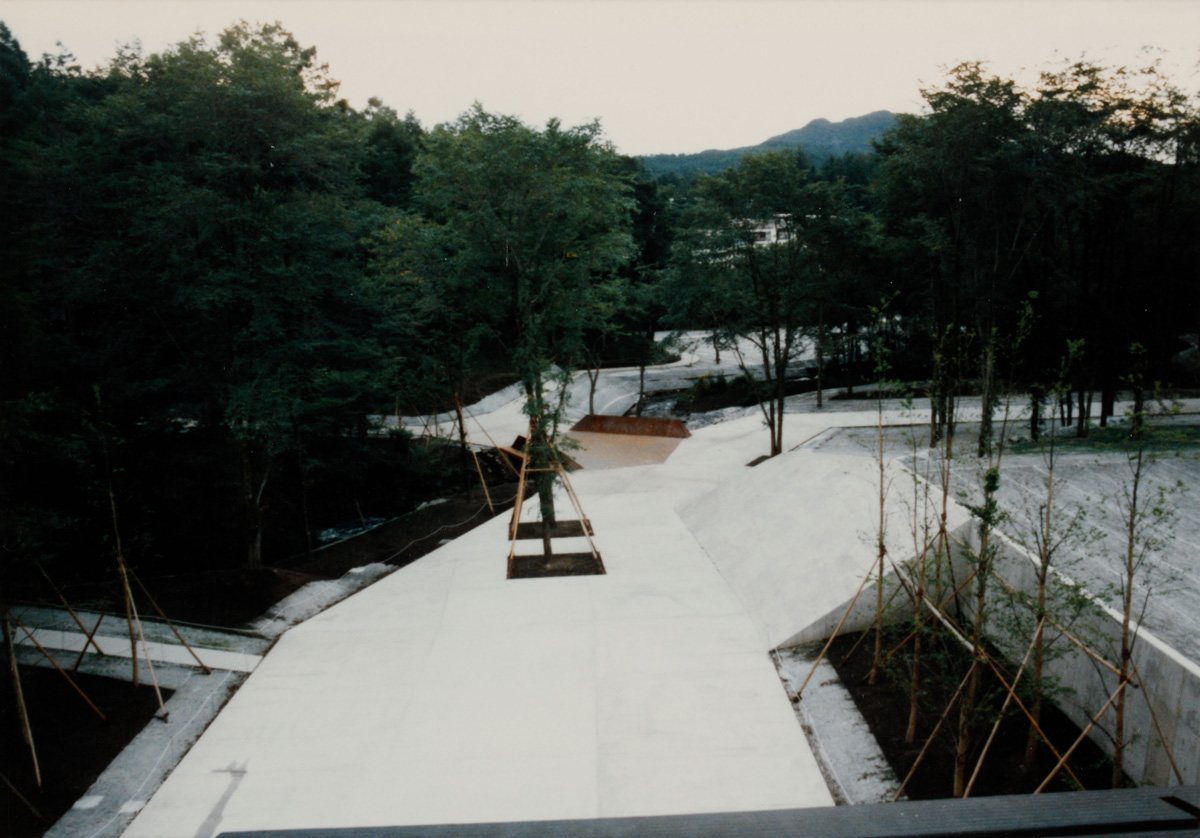
A garden concept utilizing the terrain and stream
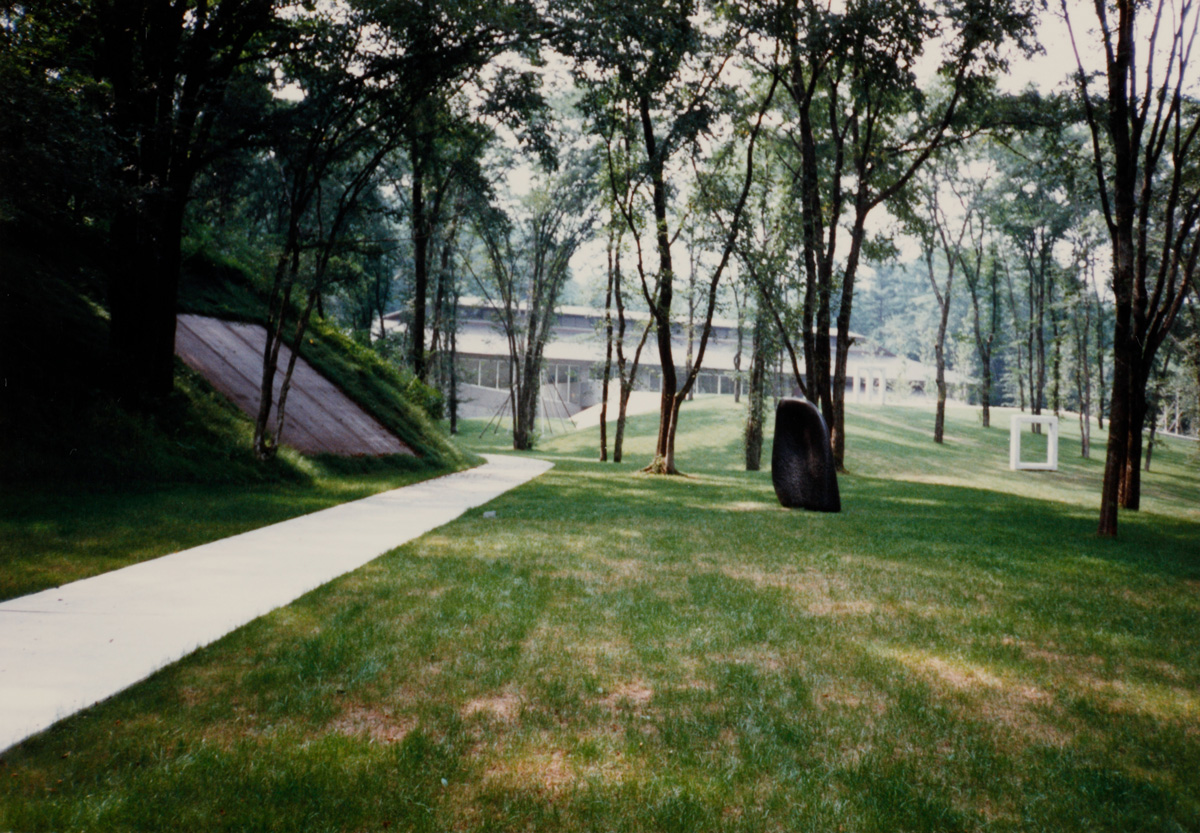
For Wakabayashi, an essential aspect of the garden was not only the visual experience of viewing the surrounding natural beauty but also the “tactile experience” offered by plants, stone, metal, and other materials. During the planning stage, proposals included the planting and relocation of trees as well as the use of igneous andesite stone for retaining walls and paving.*7 According to Yamamoto, Wakabayashi originally envisioned paving stones as much as one meter thick, though practical constraints ultimately reduced their thickness to approximately thirty centimeters. He apparently imagined each step as moving “toward the center of the earth,” believing that the sensation of walking would be fundamentally altered by the thickness of the stone beneath one’s feet.
Wakabayashi once remarked: “Of all the plants that fill the atmosphere around us, the portion extending from the ground up to the height of one’s body belongs to touch. The upper reaches of trees belong to vision, while what lies underground belongs to imagination. Our understanding of plants is inherently limited.*8 His perspective on the respective realms of touch, vision, and imagination can be felt throughout the garden. Visitors can gaze toward Mount Asama in the distance, experience the textures of plants, stone, and metal within arm’s reach, and imagine the unseen energies residing beneath the ground that shape the terrain on which they walk. Wakabayashi’s plan for the garden was organized into four distinct zones.
- Isamu Wakabayashi, “Proposal for the Renovation of the Takanawa Museum of Art Garden,” 1983, p. 13.
- Ibid., p. 17.
- Isamu Wakabayashi, “Shichigatsu no Reikyaku to Kanetsu,” Wakabayashi Isamu LW: Wakabayashi Isamu Noto, 2014, p. 225.
Zone I
The slope leading from Iron Gate to the bridge
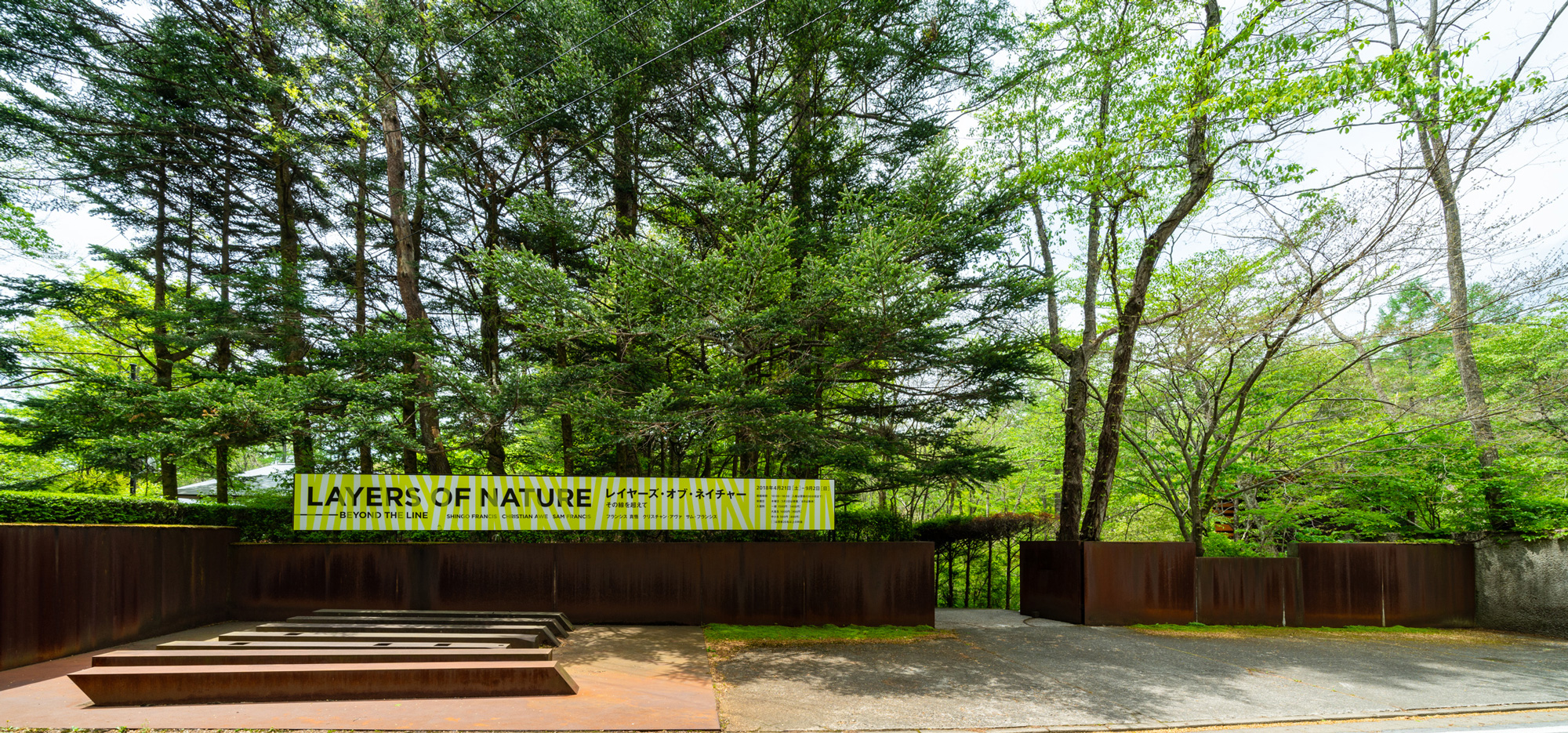
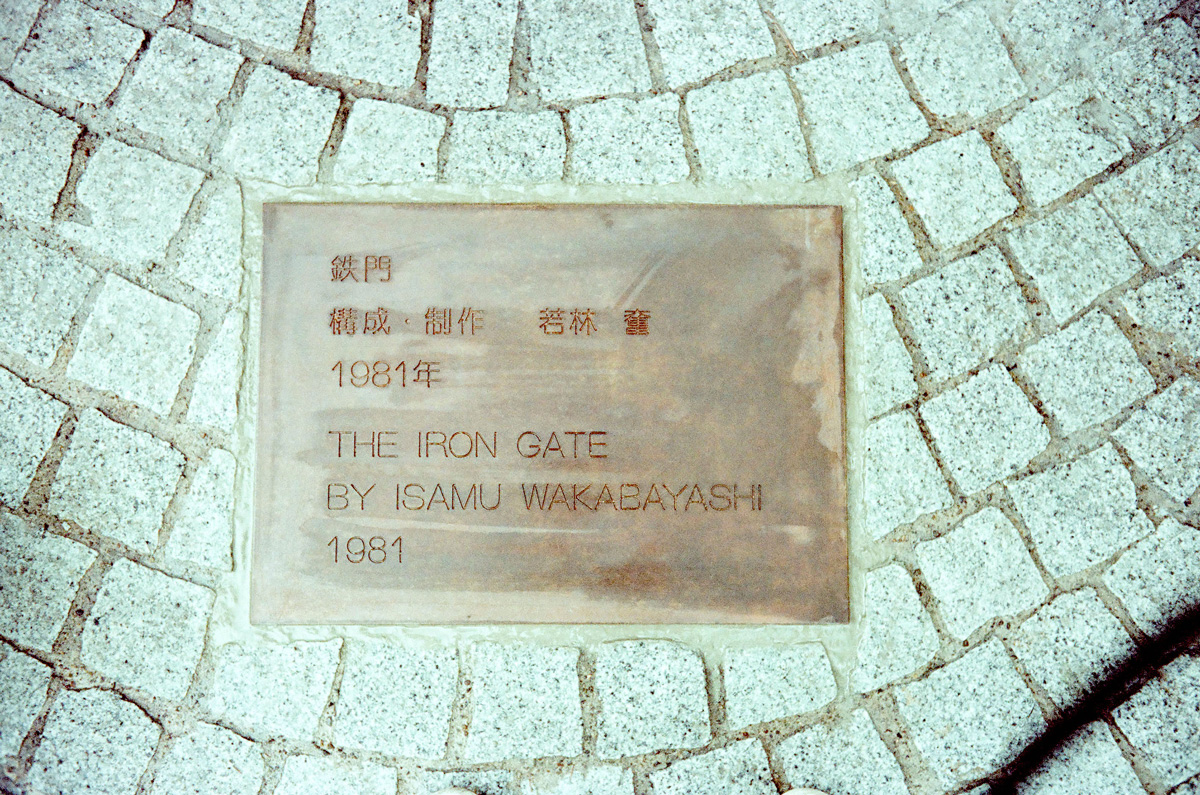
Iron Gate (1981) , Oscillation-Measure (1981) Photo: Ken Kato
Although the Iron Gate and Oscillation-Measure were originally created in 1981, both were substantially modified as part of the garden project. Initially, Oscillation-Measure was intended to be installed on the right side of the entrance approach to the main gate, but it was ultimately placed on the left side, where it remains today.
The museum’s distinctive Iron Gate was constructed by bonding weathering steel plates directly to concrete. While iron is typically protected from corrosion through surface coatings, weathering steel develops a dense, protective patina containing elements such as copper and nickel, which prevents the underlying metal from rusting. Initially dark and metallic in appearance, its surface gradually changes under outdoor conditions, shifting from a vivid reddish brown to deeper brown tones and eventually to a dark brownish-black. From the moment visitors enter the garden, they encounter colors and textures that continue to evolve in response to the natural environment.
1981
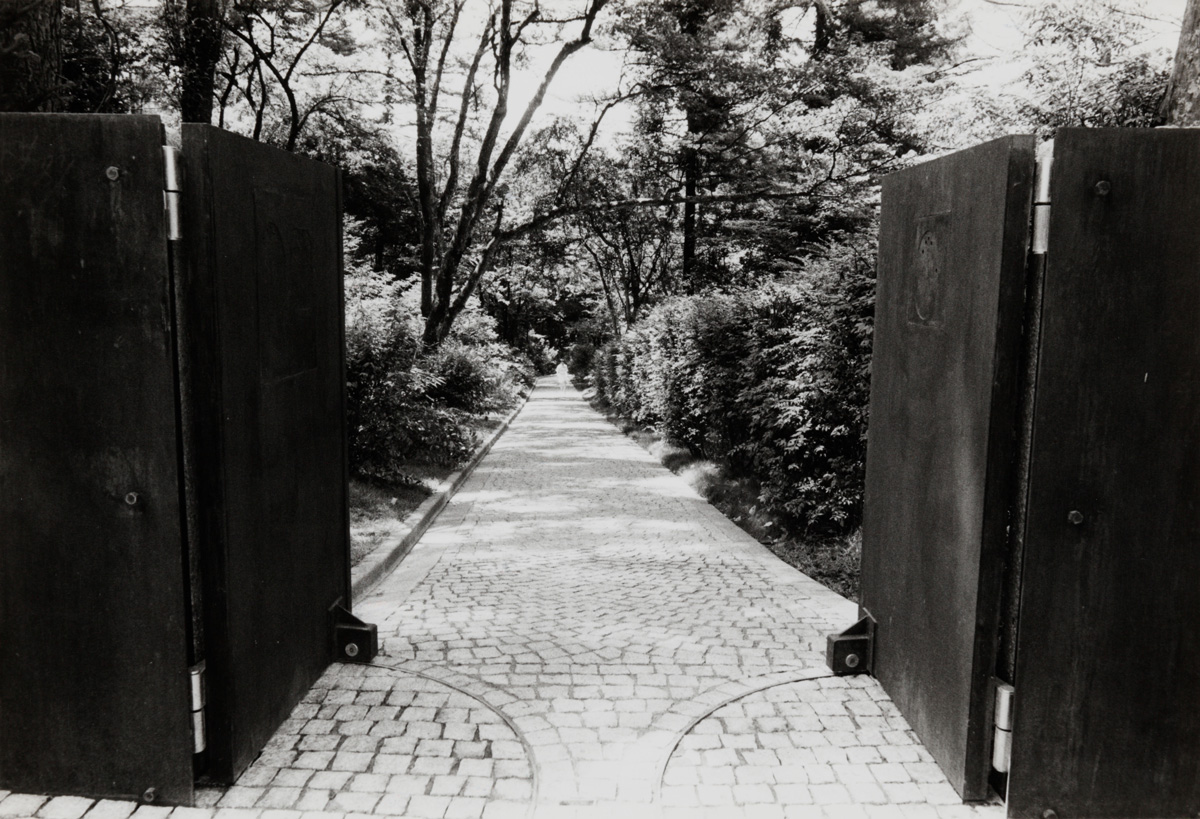
(left/right) Iron Gate, 1981
Photo: Norihiko Matsumoto
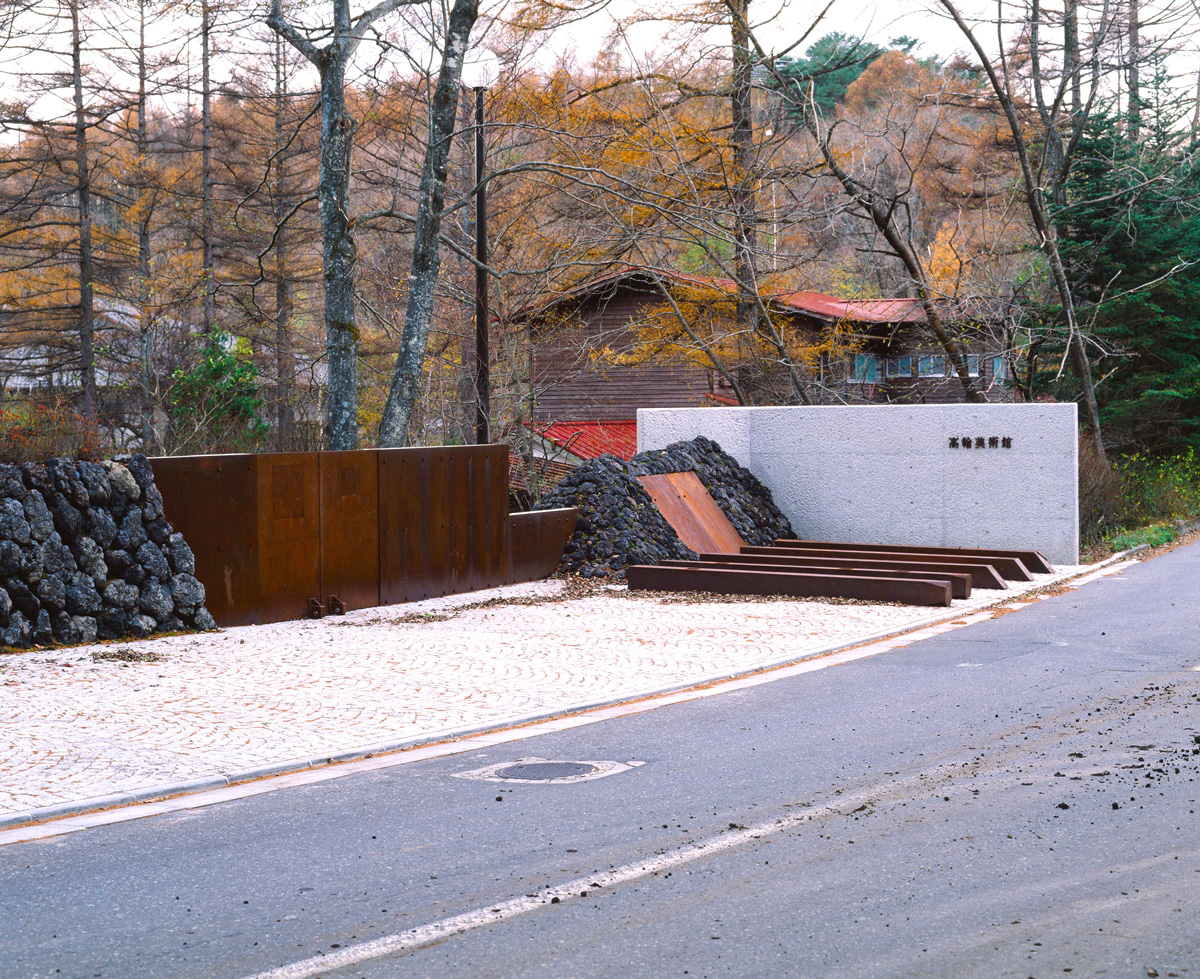
(left) Iron Gate, 1981/Oscillation-Measure, 1981
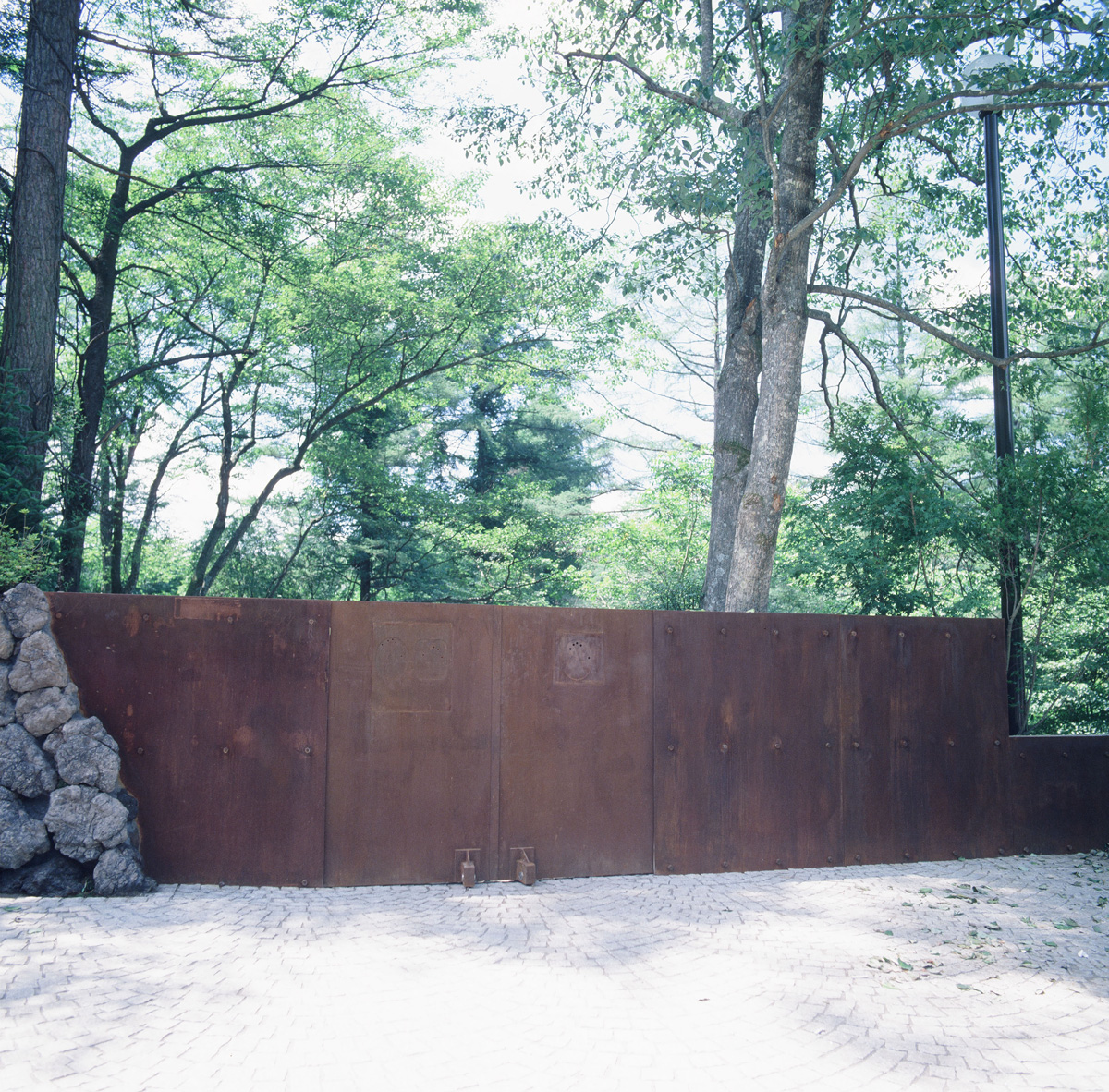
1986-89
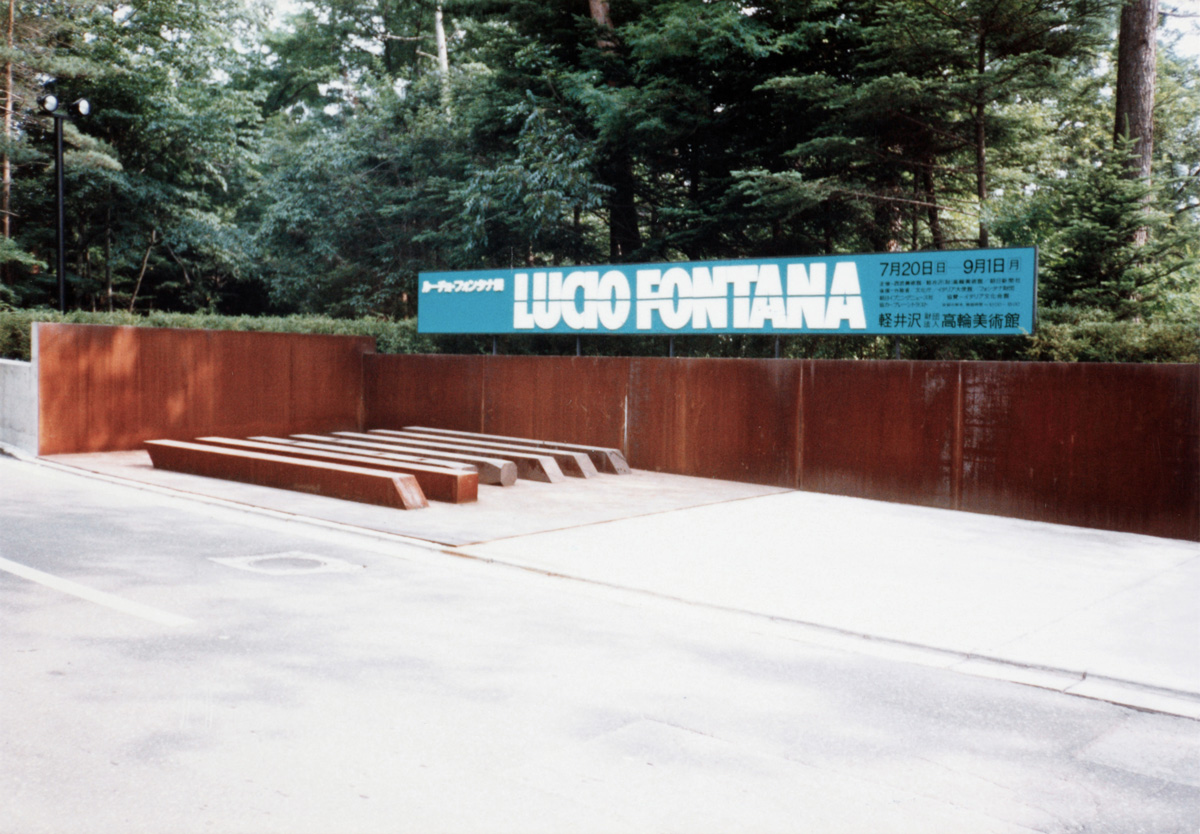
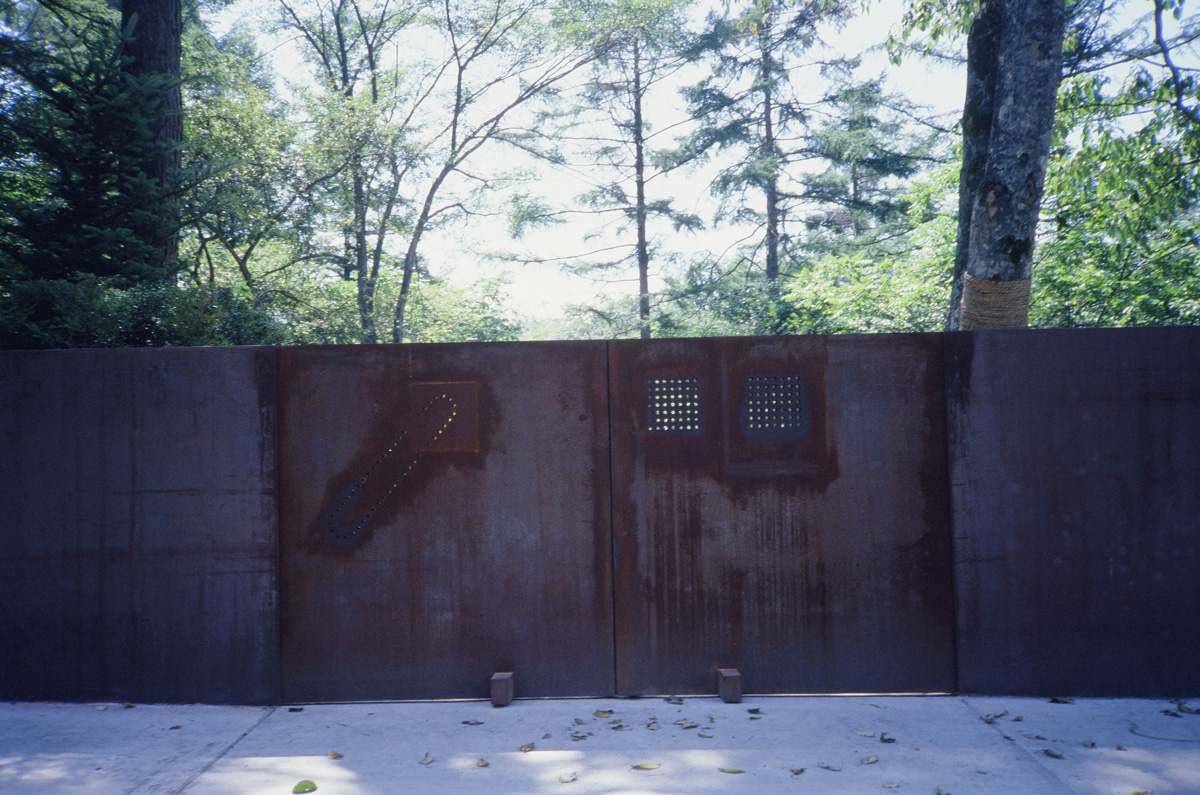
Iron Gate after weathering, shifting from a vivid reddish brown to deeper brown tones
Oscillation-Measure is a device conceived by Wakabayashi to gauge the relationship between human beings and nature by perceiving the “oscillations” transmitted through a sculpture positioned between the self and the world beyond. Since the presentation of Study for Oscillation-Measure in 1977, he continued to explore this idea. The imprint of a hand at one end of the work suggests the act of “touching” vibrations that travel through layers of time and space, linking the unseen past to the present.
Wakabayashi once stated: “I have continued to ask myself where a sculpture can be placed. Put another way, I want to see what lies beyond sculpture. I do not know whether there are people there. At times, I feel that I can sense what lies beyond sculpture, together with the desolate ground that supports the whole of it.”*9
It is therefore significant that Oscillation-Scales stands at the entrance to the garden, a space intended to encourage “tactile experience.” Through the work, visitors are invited to imagine not only the plants and animals of Karuizawa, the wind, and the flowing river, but even the subtle vibrations of Mount Asama itself—an active volcano.
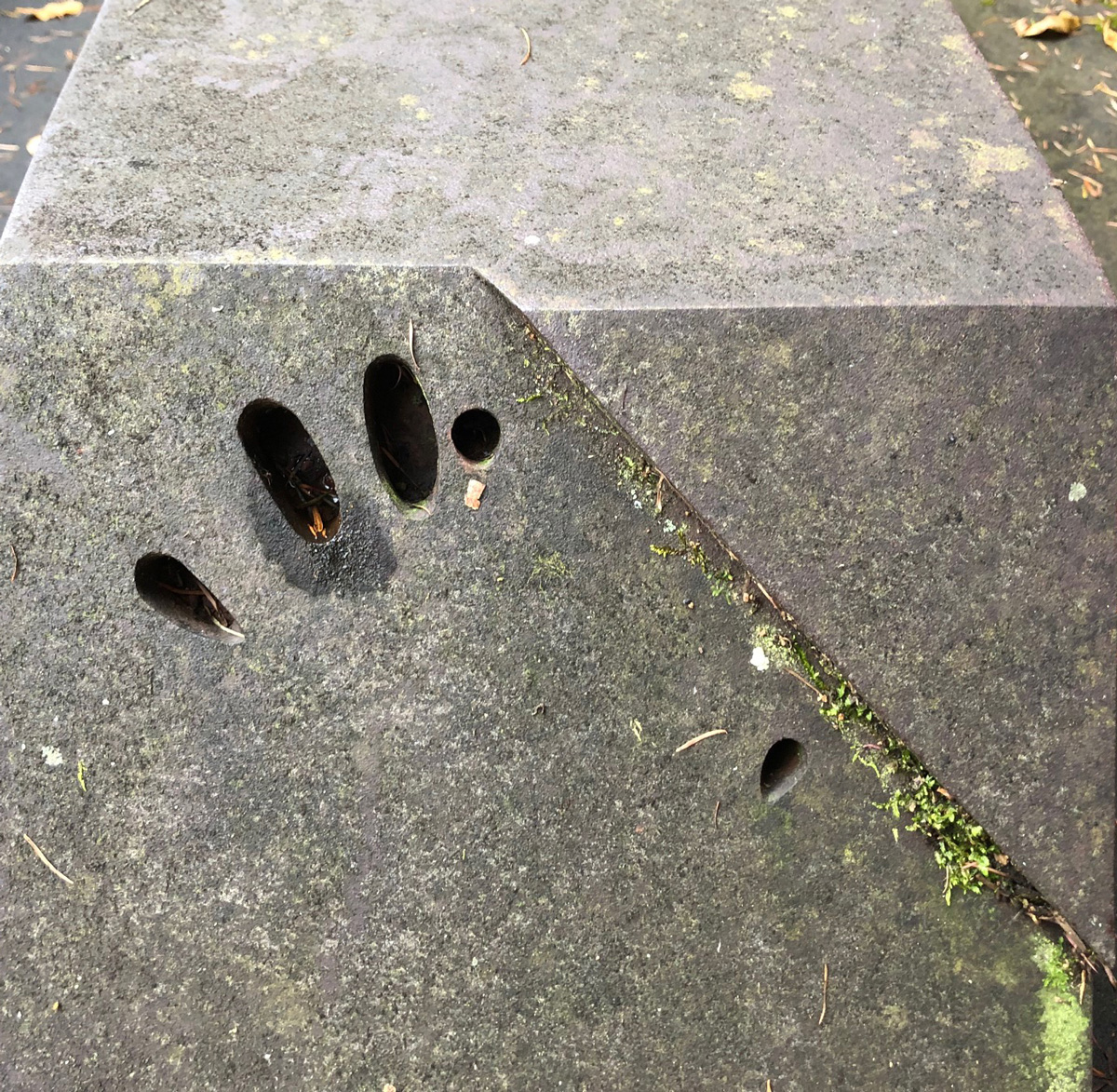
Oscillation-Measure (1981), detail (handprints)
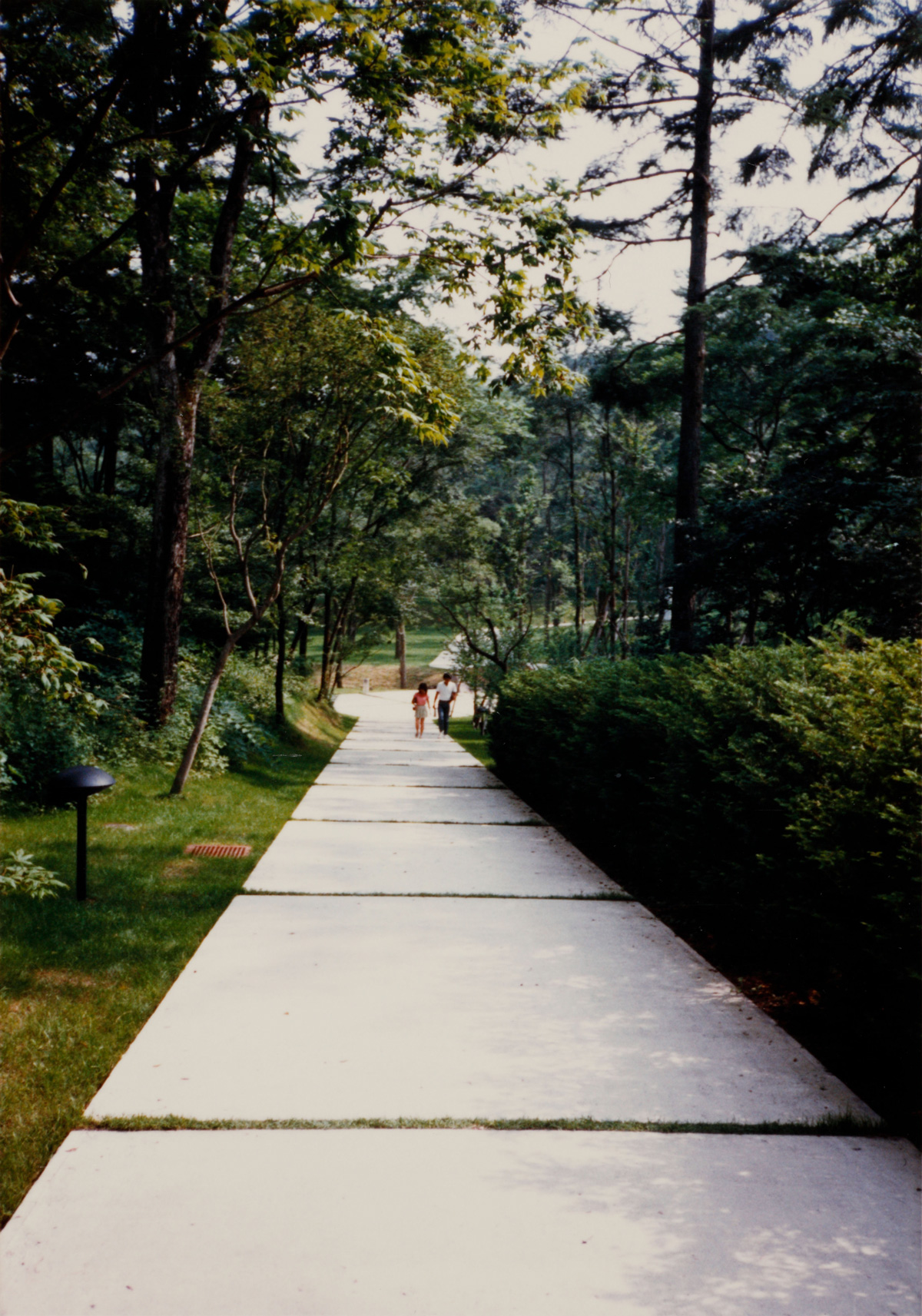
Passing through the iron gate, visitors descend a tree-lined slope to a fork in the path, where a Pentagonal bridge made of weathering steel spans a small stream.
Recalling the bridge’s construction, Yamamoto explained that Wakabayashi’s aim was to elevate “the quality of iron to a level different from that of conventional iron sculpture.” Iron structures are typically characterized by a rugged appearance, with bolts and other components prominently visible. In contrast, every surface and edge of this bridge was refined to an almost blade-like sharpness, leaving no visible indentations or irregularities. Even the bridge deck was fabricated by joining eight or nine steel plates and meticulously grinding the surface so that the welded seams would be as inconspicuous as possible.
The appearance of the steel changes continually according to weather conditions. On sunny and rainy days alike, its surface takes on different qualities. Particularly striking is the sight of the weathering steel after rainfall, when it becomes luminous with moisture and the surrounding trees are reflected across its smooth surface. At such moments, the bridge becomes one of the garden’s most beautiful features.
Pentagonal Bridge (on a clear day) Photo: Mareo Suemasa
The construction of the pentagonal bridge, which achieved a quality of iron unlike any other, required nearly four months of experimentation and refinement. More than a simple passageway, the bridge possesses a spatial character reminiscent of a small plaza. Its railings are subtly inclined on both sides, and a series of regularly spaced cylindrical openings punctuate its structure. As wind passes through these openings, vibrations are generated. In this sense, the bridge seems to embody the very essence of the garden itself—a landscape of valleys and depressions animated by the movement of air and the transmission of unseen forces.
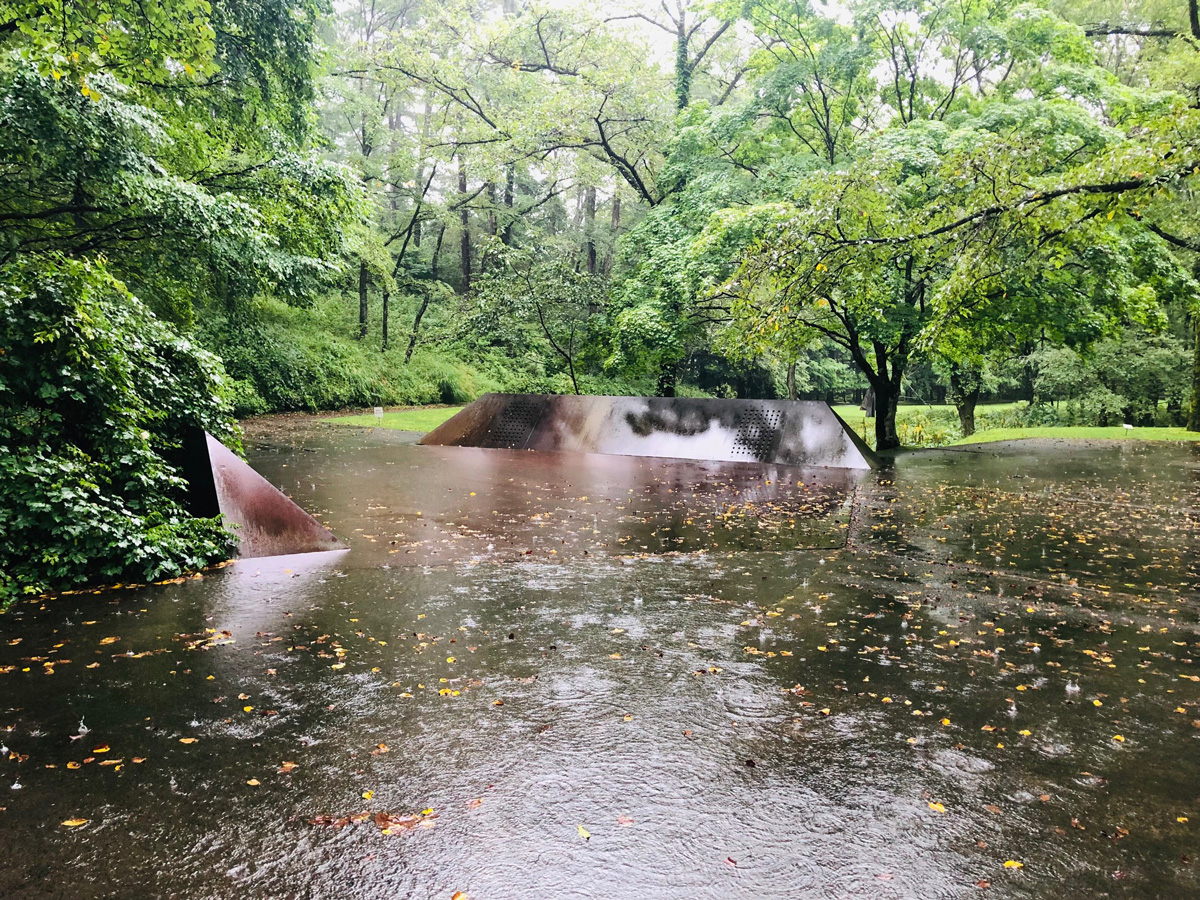
Pentagonal Bridge (on a rainy day)
- Isamu Wakabayashi, “Hoka to Jibun no Aida no Kyori,” Wakabayashi Isamu LW: Wakabayashi Isamu Noto, 2014, p. 272.
Zone II
The Terrace Adjacent to the Museum / Plateau
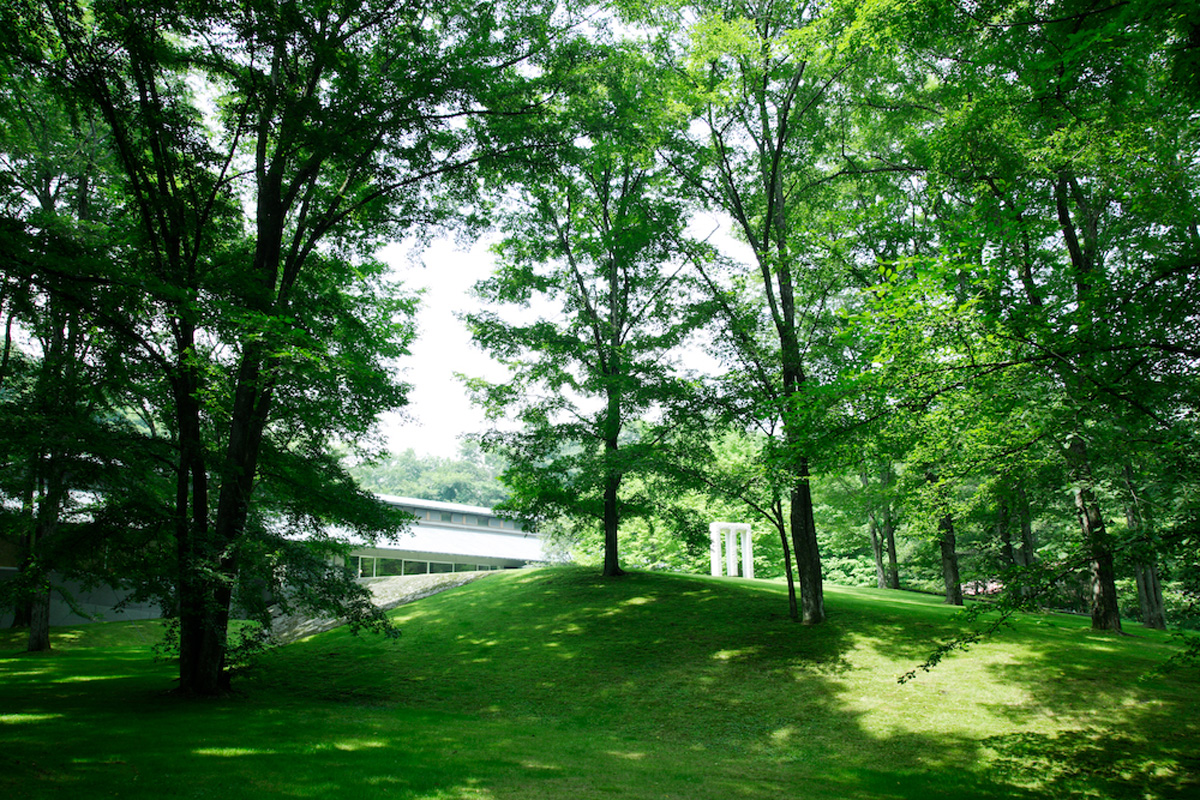
The broad approach extending from the pentagonal bridge to the museum building is articulated through the use of vegetation and stone. The slope of the plateau, conceived to integrate the garden with the architecture, was set at the same 17-degree angle as the foothills of Mount Asama mentioned earlier.*10 According to Yamamoto, the plateau was formed using soil excavated from the garden’s undulating terrain after portions of it had been cut and graded. Although the area originally consisted of a rounded hill, the slope was reshaped to a carefully calculated angle, with its form guided by the existing trees growing on the site.
Along this slope, a concrete base was first constructed and then fitted precisely with weathering steel plates. As with the pentagonal bridge, several steel plates were joined together, yet the surface was crafted to appear as a continuous plane rather than a collection of separate elements. Yamamoto notes that this use of weathering steel differed from Wakabayashi’s other interventions on the site. Because the steel was installed on an artificially constructed slope over a concrete foundation, it represented a deliberate demonstration of how Wakabayashi wished iron to be perceived as a material. On this plateau, the tactile materials central to the garden’s conception—plants, stone, and metal—come together as a unified whole while their individual boundaries remain clearly perceptible.
The plateau also generates a variety of viewpoints throughout the garden. Along the route from the pentagonal bridge to the museum building, visitors become aware of the plateau rising to the left, the river and vegetation to the right, and the movement of people through the landscape. From within the museum, the plateau frames an open view across the garden. Looking upward along its slope toward the museum building, Mount Asama appears in the distance. From the southern face of the plateau, the landscape opens into the valley beyond. *11 Seen from these and other perspectives, the plateau functions as a central axis through which multiple views are composed and interconnected. The result is a design guided by a distinct sculptural intention—one that seeks to unite museum architecture and garden, the man-made and the natural, into a single integrated environment.
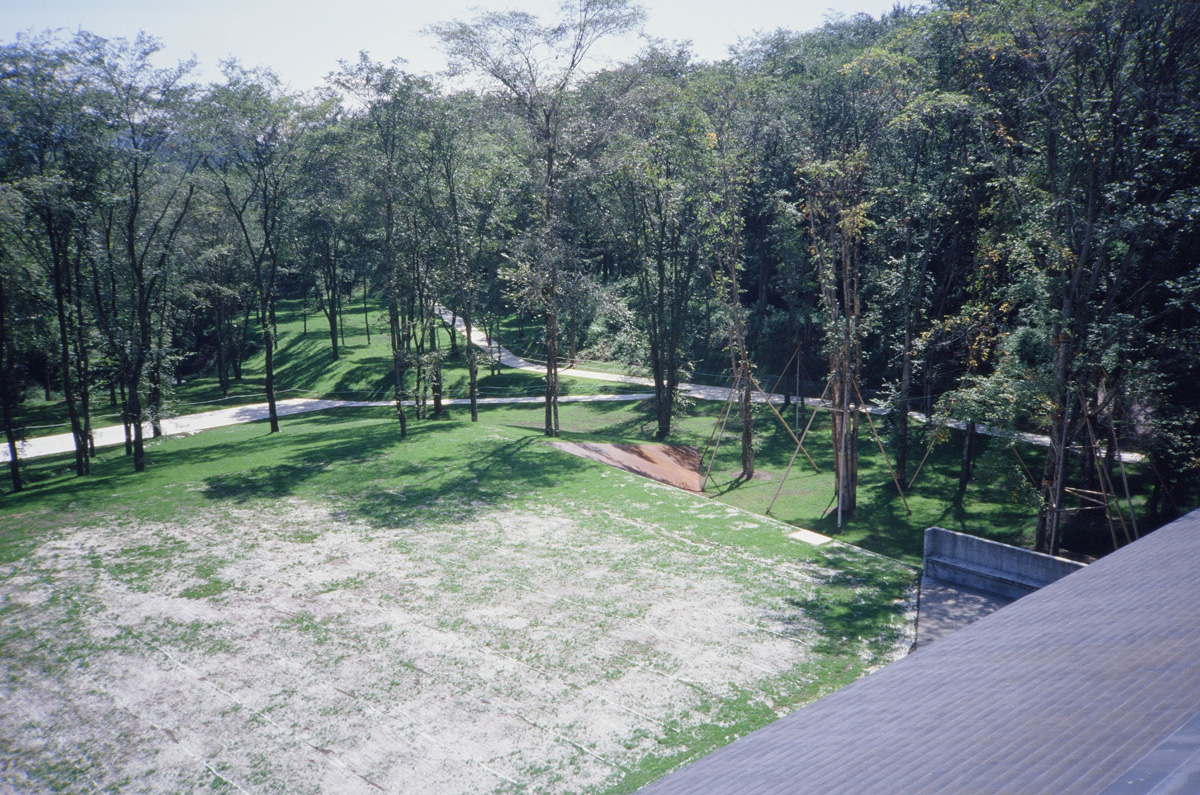
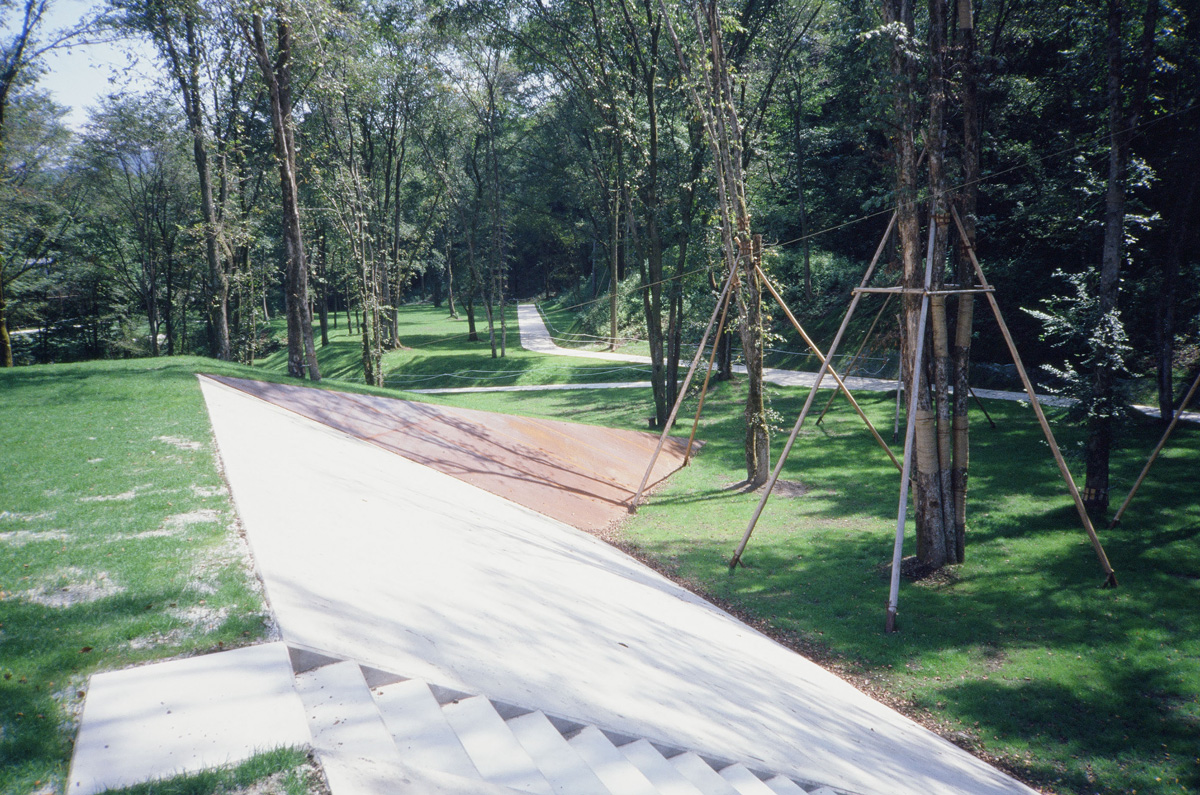
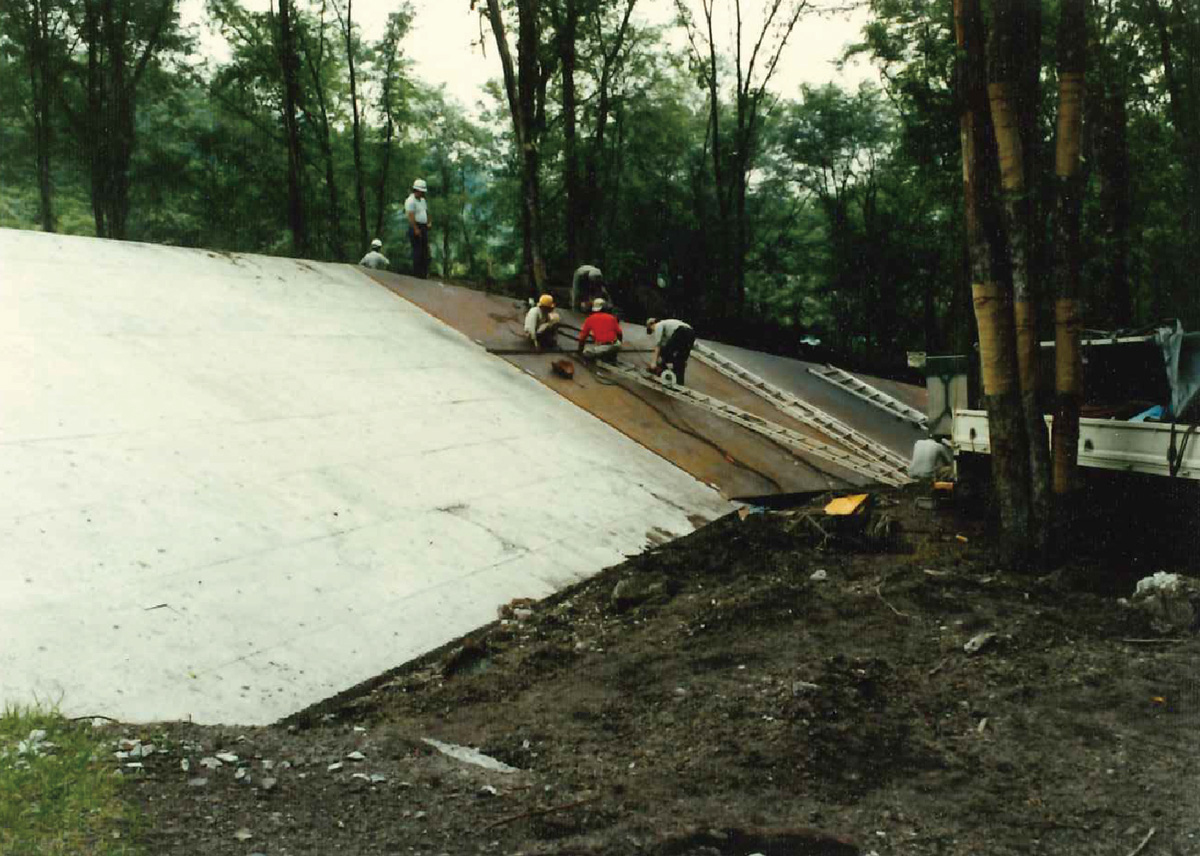
Plateau: Concrete and Weathering Steel Construction Photo courtesy of Shogo Yamamoto
- Shinya Koizumi, “Wakabayashi Isamu no Mittsu no Niwa,” Saison Art Program Journal No.4, 2000, p. 23.
- Wakabayashi, “Proposal for the Renovation of the Takanawa Museum of Art Garden,” p. 7.
Zone III
The Flat Riverside Area / Site for Outdoor Sculpture
This zone was conceived as a site for the installation of Wakabayashi’s sculptures. From here, Mount Asama can be seen rising beyond the museum building, forming a striking backdrop to the architecture. Along the boundary facing away from Mount Asama, adjacent to a skating rink that existed at the time, a row of metasequoia trees was planted. Though each tree was only about the thickness of a person’s arm when first planted, they have since grown into towering mature trees.
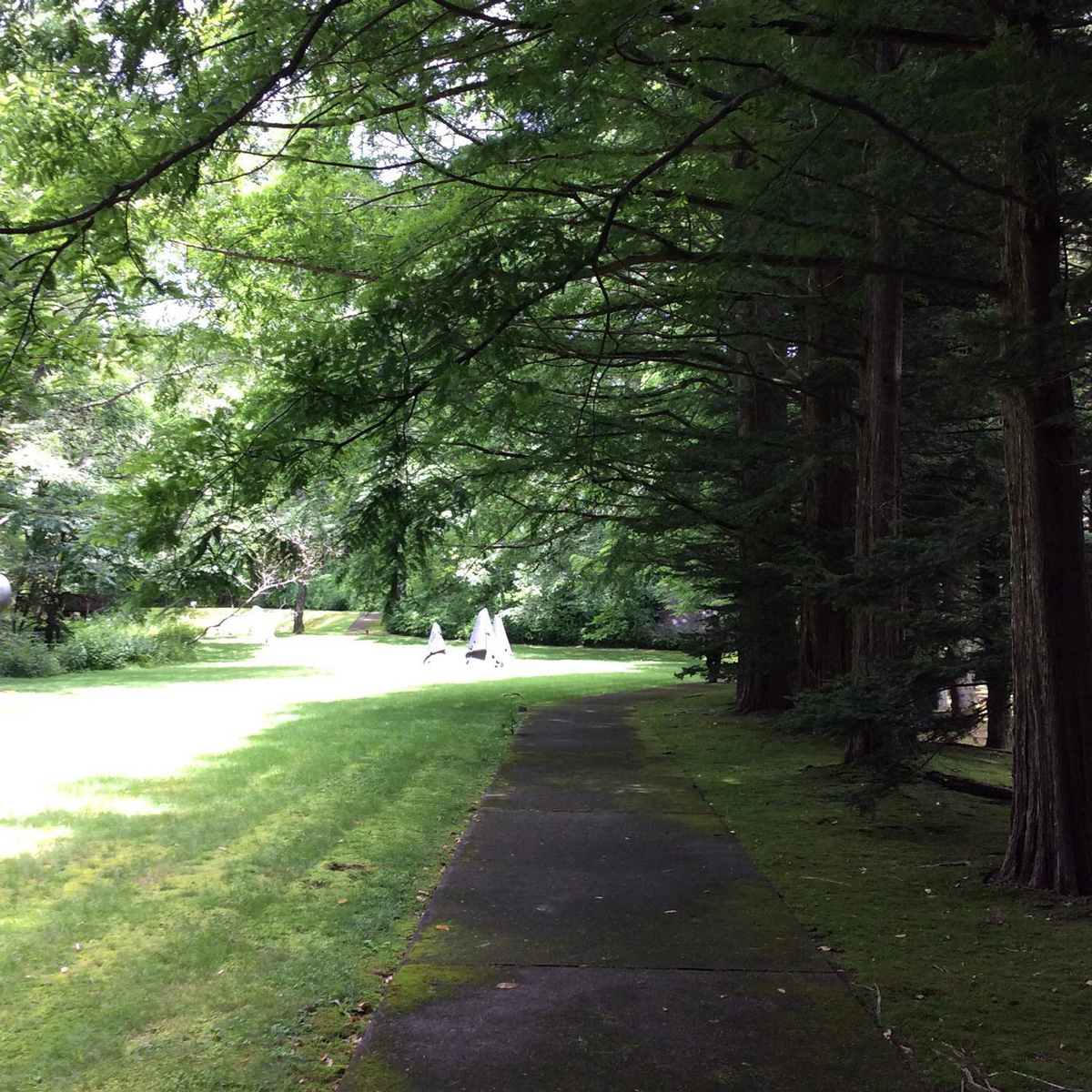
Metasequoia-lined avenue
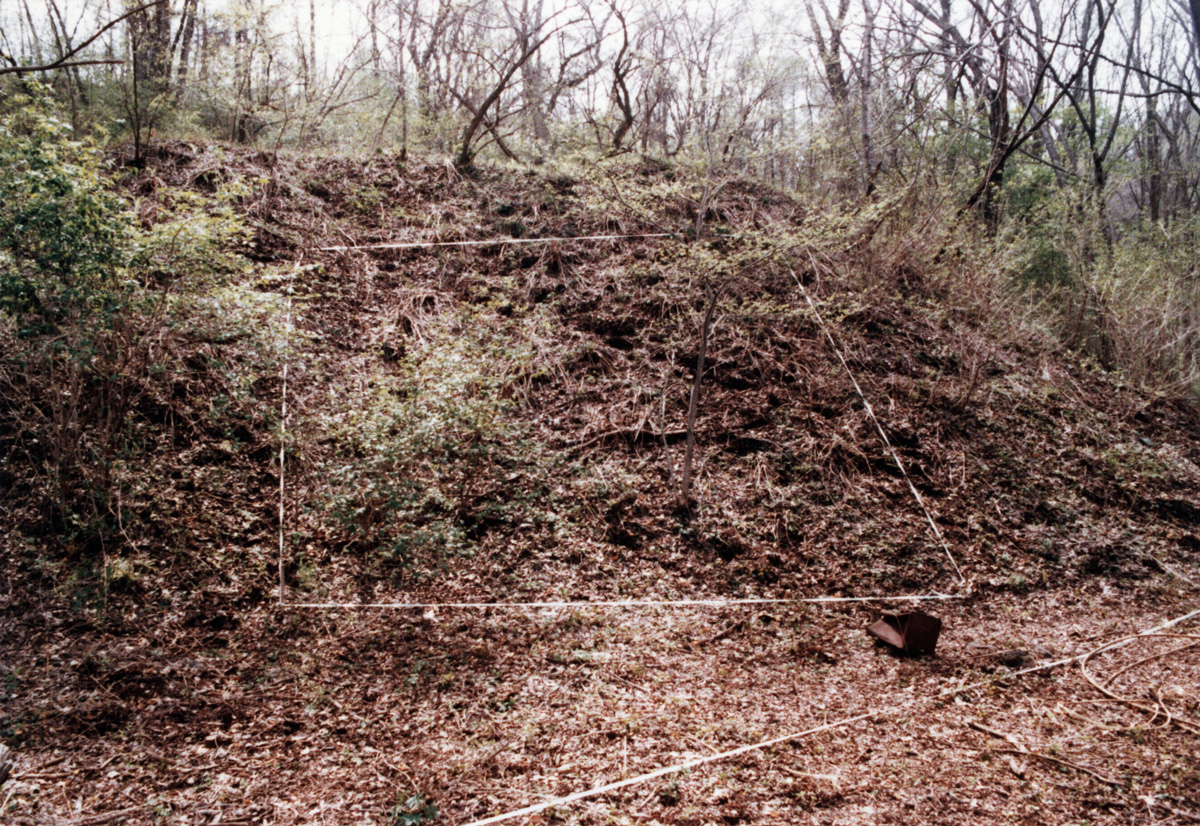
Construction work on the slope
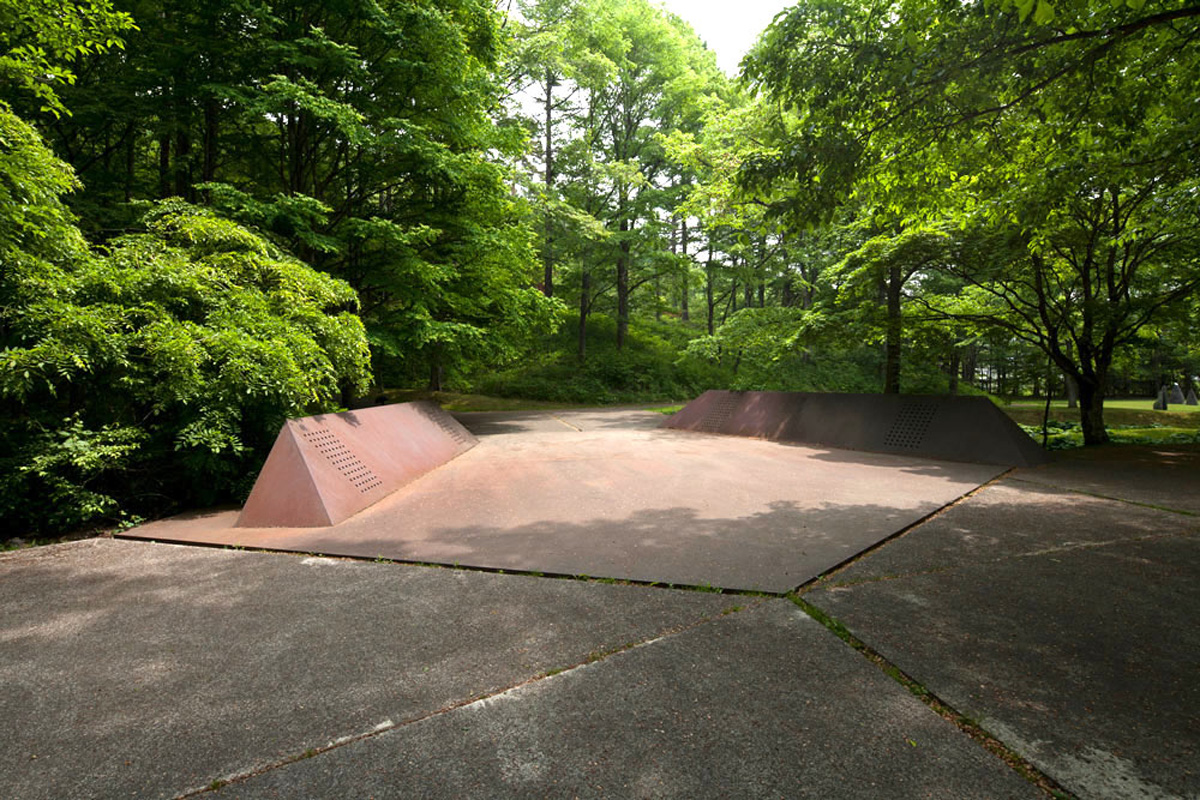
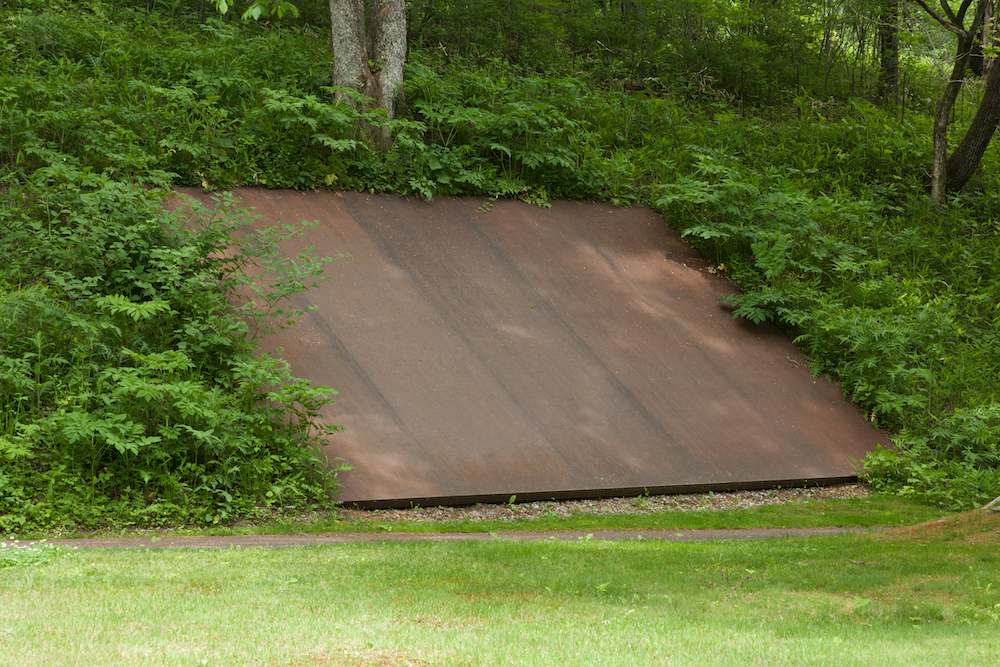
Installed on this slope are Wakabayashi’s weathering steel works, set at the 30-degree gradient that he regarded as characteristic of the surrounding terrain.*12 According to Yamamoto, these sculptures differ fundamentally from the weathering steel surface incorporated into the plateau described above. Whereas the plateau steel was mounted on a concrete substructure, these works have no underlying frame or concrete foundation whatsoever. Instead, large box-like forms made of 12-millimeter-thick steel plates are placed directly on the ground.
Their purpose was to explore how plants and iron might coexist, and how, over time, vegetation would gradually encroach upon the steel, allowing it to become integrated into the landscape. The structures themselves contain no internal foundation; they are supported only by piles driven into the ground. Similar outdoor sculptures were installed at three locations throughout the garden, including this slope, the slope facing the plateau, and a neighboring hillside.
Each of these forms is set slightly above the ground, creating spaces into which plants can grow. Gravel excavated during construction was placed in the gaps between the steel and the earth, ensuring that materials generated during the making of the garden were put to effective use, much as the excavated soil was reused to form the plateau.
Comparing these works with the sculpted plateau reveals a striking difference in the way vegetation grows around them, making clear the distinct intentions behind each intervention. Wakabayashi’s works are not monumental outdoor sculptures in the conventional sense. Rather, they exist in the space between nature and human intervention, conveying the contours and gradients of the land, the gradual encroachment of vegetation, the changing surface of rusting steel, and the passage of time itself.
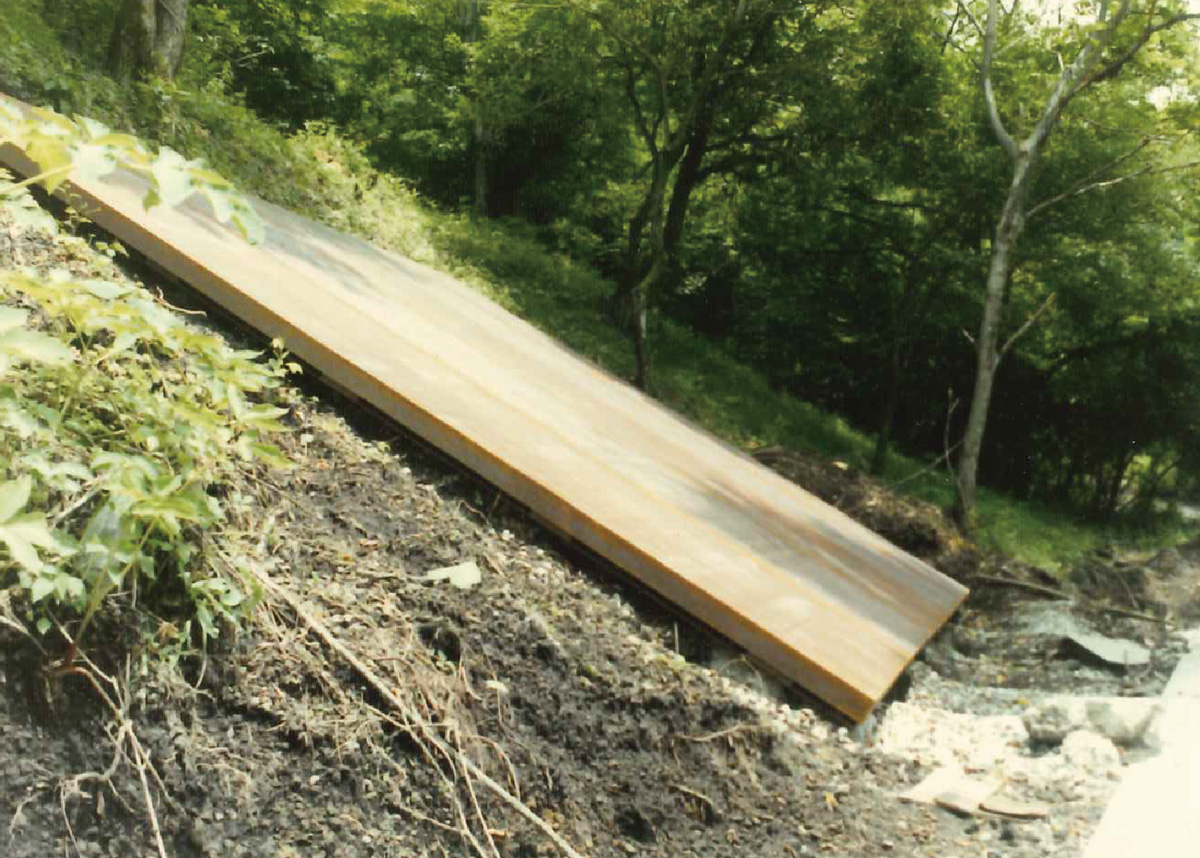
Construction on the Slope Image courtesy of Shogo Yamamoto
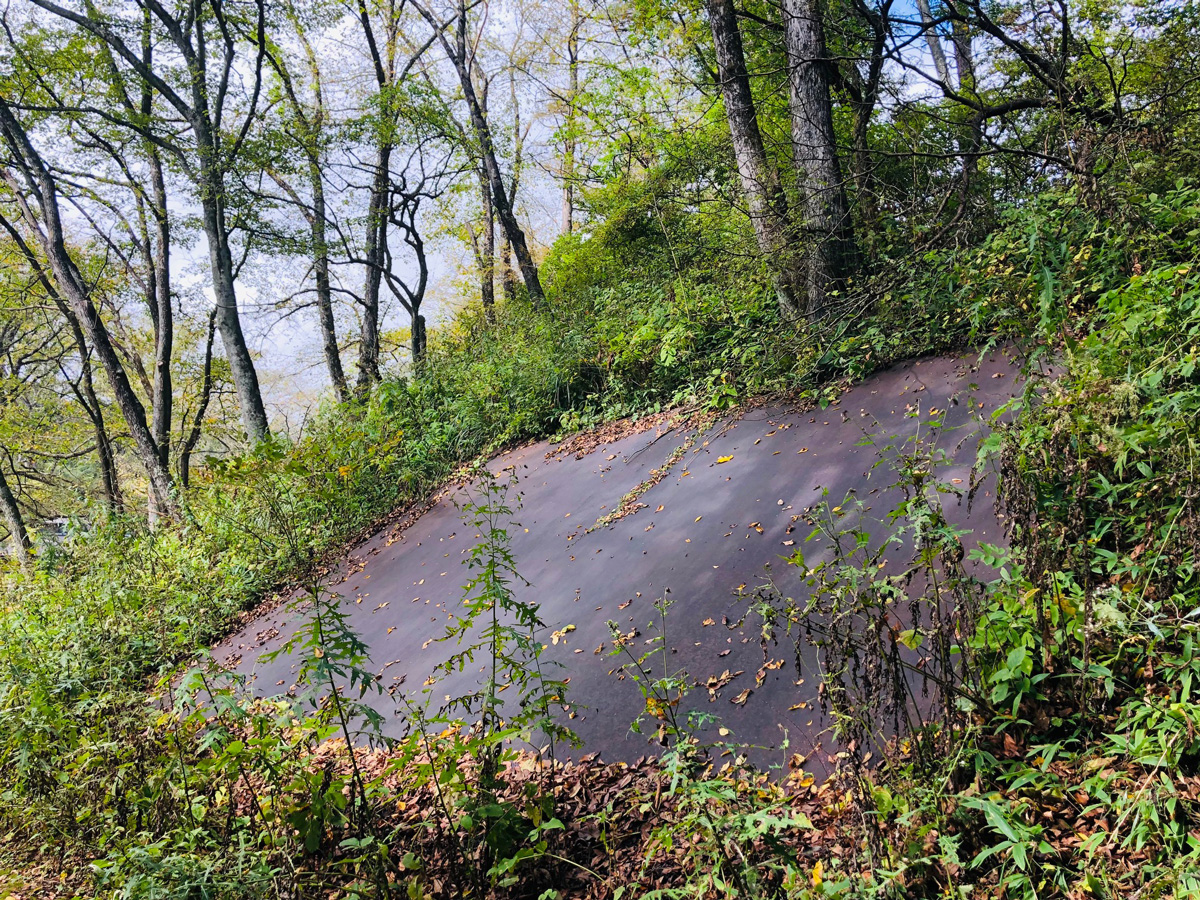
Weathering Steel on the Slope: Vegetation Encroachment (Autumn) Photo: Mareo Suemasa
- Koizumi, “Wakabayashi Isamu no Mittsu no Niwa,” p. 23.
Zone IV
Steep Southwestern Slope with Native Vegetation / Iron Bridge
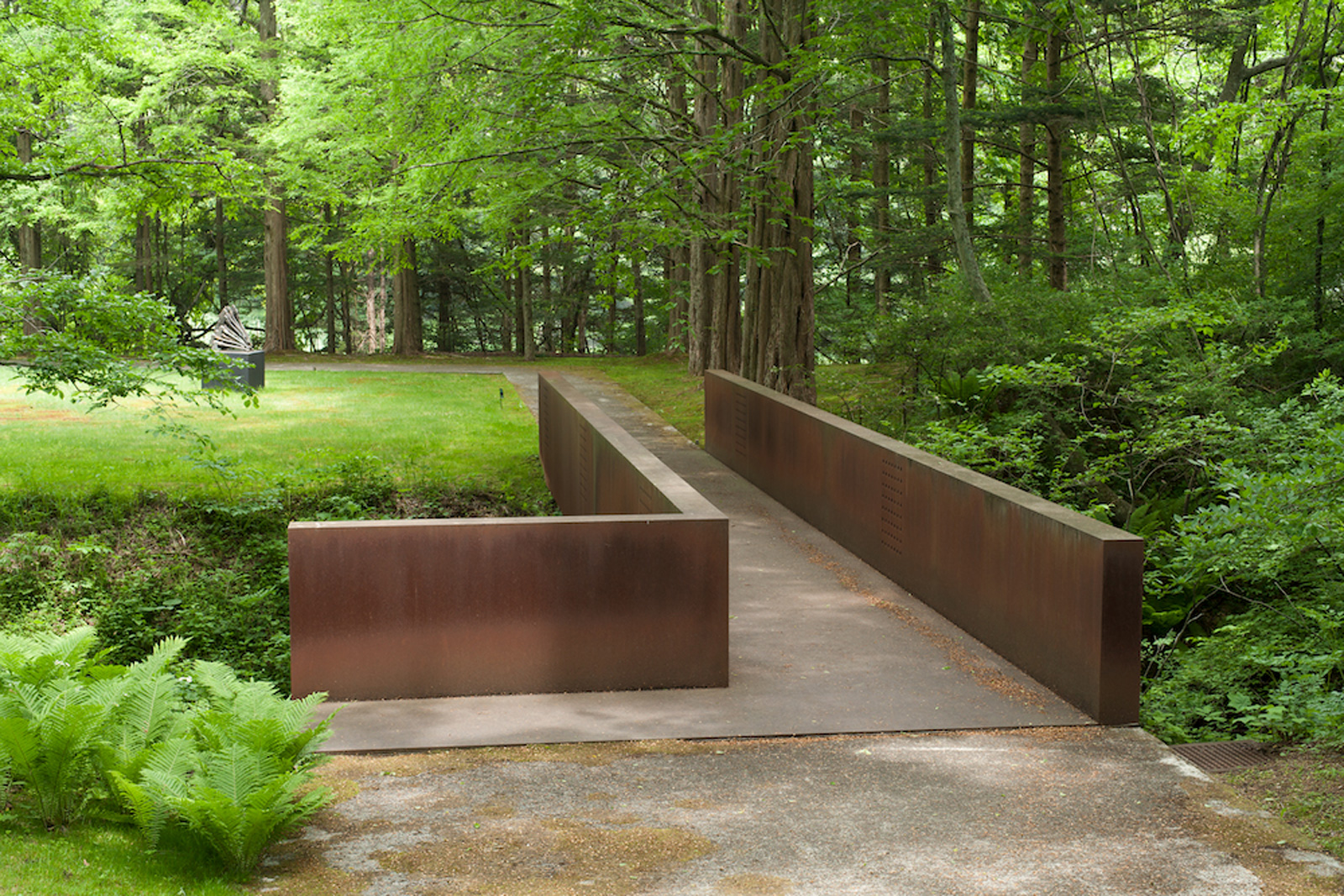
Regarding the iron bridge located beyond the open lawn, Wakabayashi requested that the bridge be designed without visible girders—or at least with them concealed as much as possible. The resulting structure introduces no unnecessary lines into the garden’s valleys, slopes, and depressions; instead, a simple straight bridge spans the stream at a right angle.
As a steel form seemingly suspended above the water, it is an exceptionally unusual structure. Yamamoto recalls being impressed that such a bridge could be realized from an engineering standpoint. In conventional bridge construction, steel H-beams measuring approximately 50–70 centimeters in depth are typically used to provide structural strength. Wakabayashi deliberately rejected this approach. Rather than exposing a girder beneath the deck, the entire bridge was conceived as a hollow box-like structure, giving it a lighter and more graceful appearance (Fig. 1).
Like the other steel works in the garden, the bridge is hollow inside. Its surfaces are remarkably seamless, free from visible joints, protrusions, or irregularities. A series of openings punctuate the structure, allowing it to register vibrations generated by the wind. As visitors descend the steps and cross the bridge, the view suddenly opens before them, revealing a composition stripped of all unnecessary elements and reduced to its essential sculptural form.
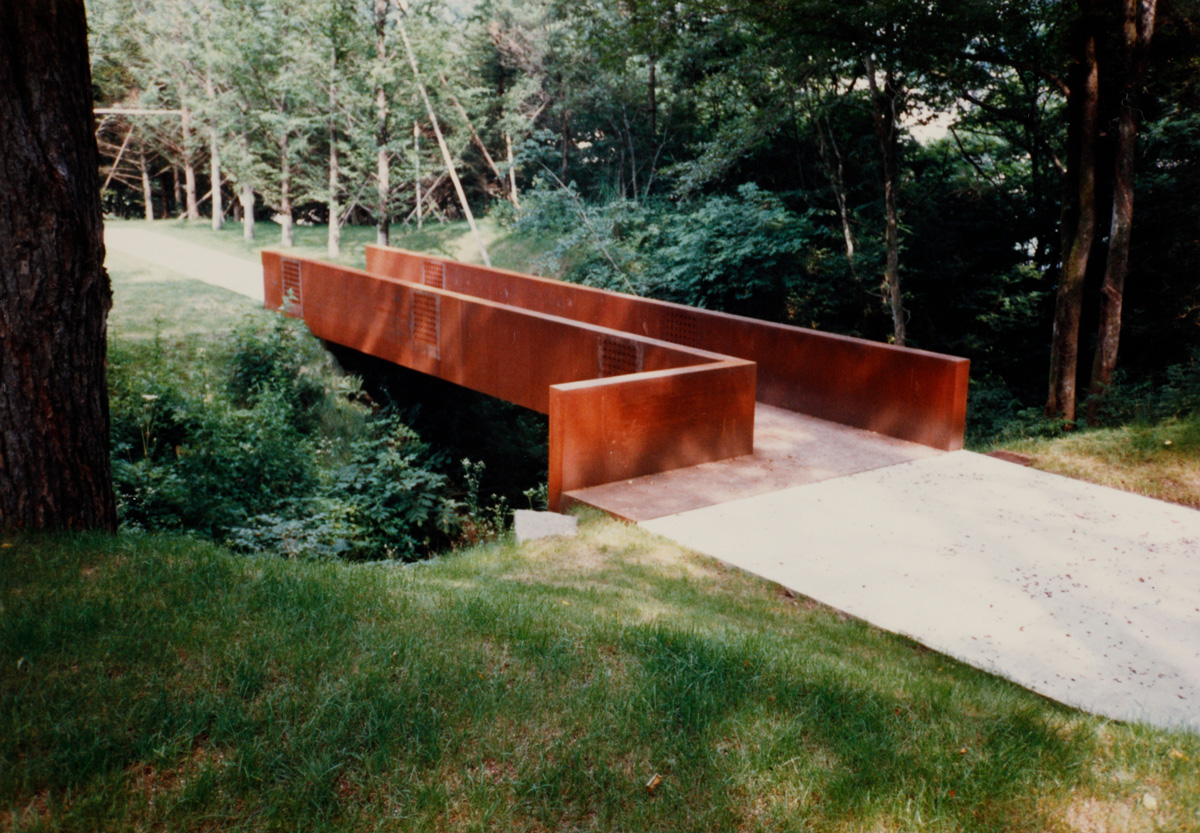
Iron bridge in its original reddish-brown color shortly after opening
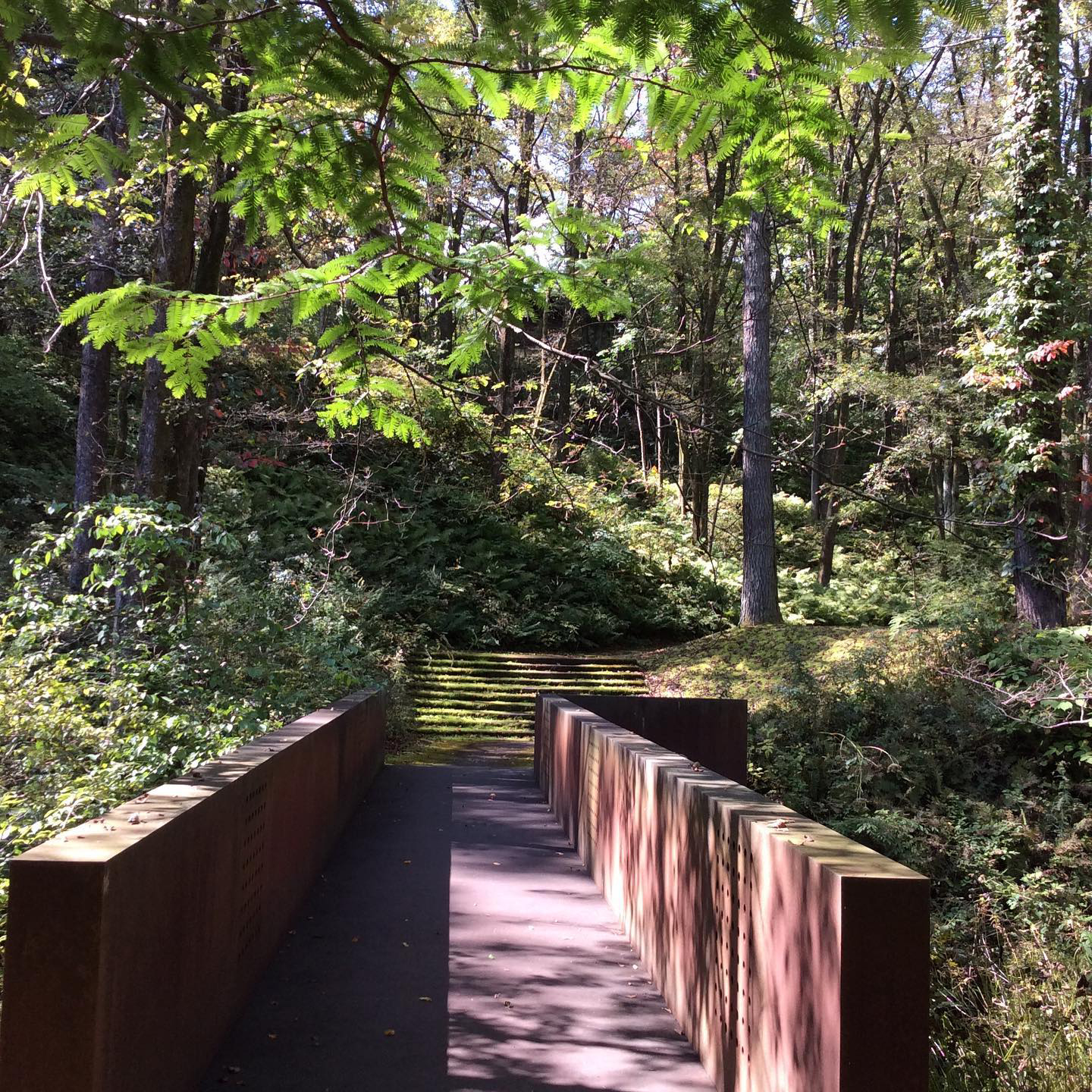
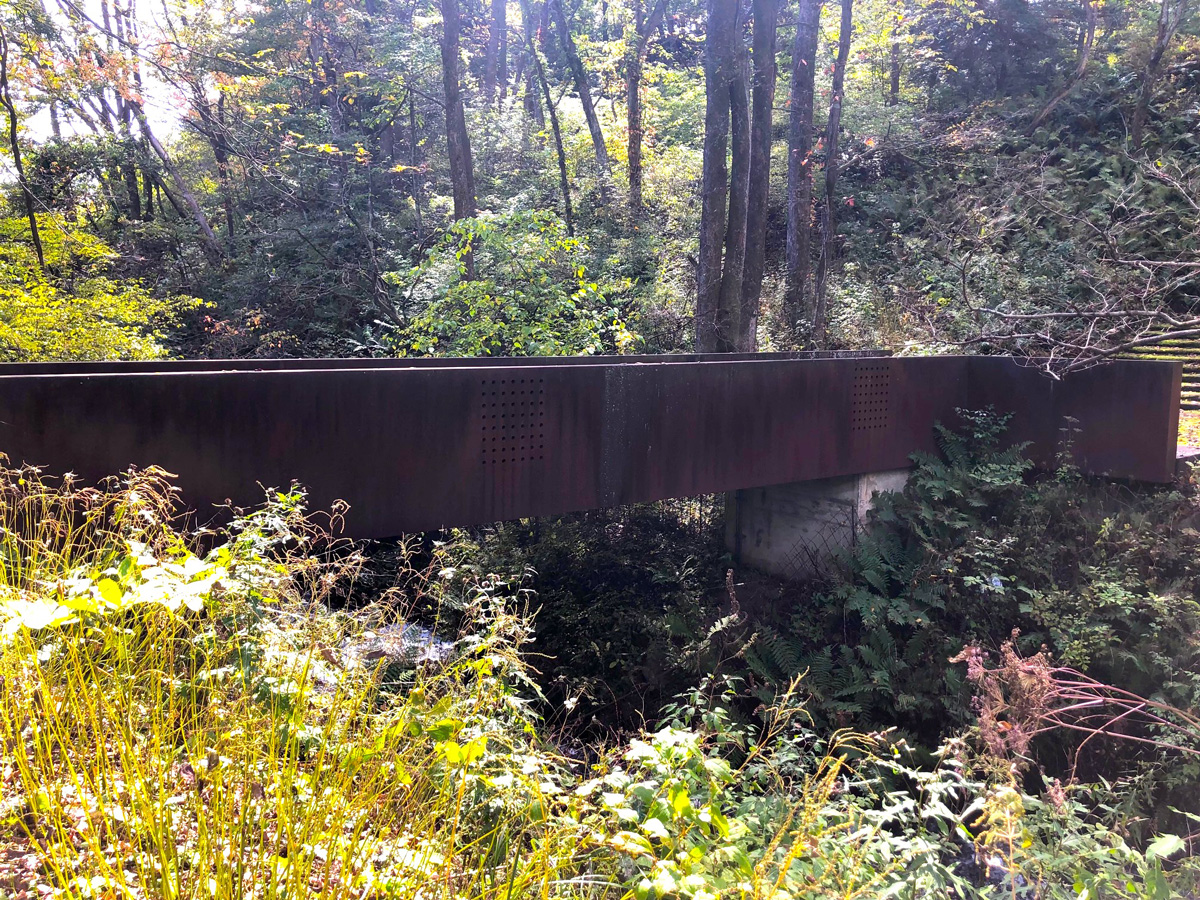
Iron Bridge without Visible Girders (Autumn) Photo: Mareo Suemasa
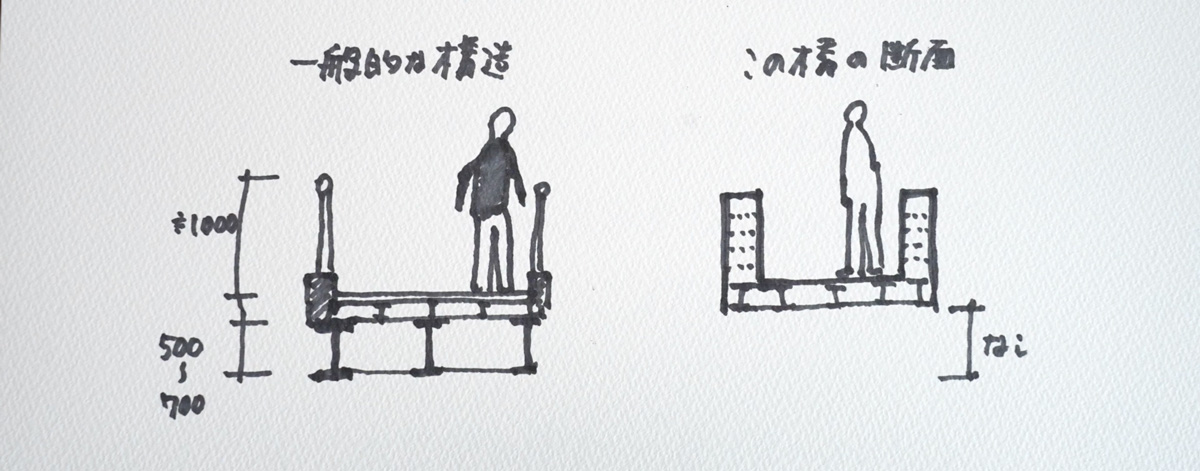
Fig. 1. Diagram of the Bridge Structure Courtesy of Shogo Yamamoto
According to the original plan, the river island beneath this bridge was to be reclaimed by covering it with weathering steel plates and constructing an additional bridge across it. Drawings and scale models reflecting this proposal were produced. However, the plan could not be realized, as regulations under Japan’s River Act prohibited any alteration of the island.
According to Yamamoto, there was once a proposal to cover the stone steps beyond this bridge with weathering steel plates as well. This idea, like the intervention planned for the river island, ultimately remained unrealized.
Garden Vegetation
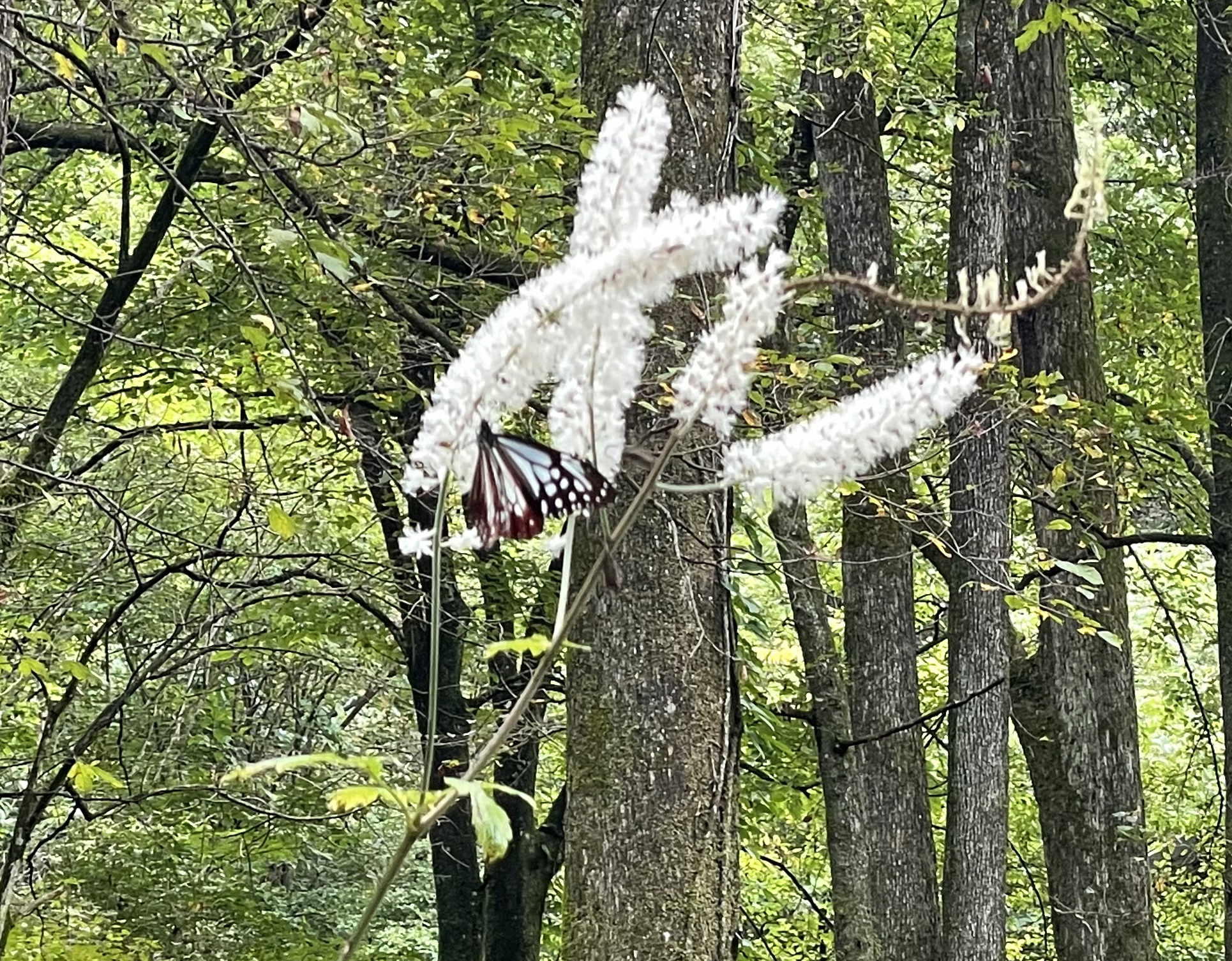
Bugbane and chestnut tiger butterflies
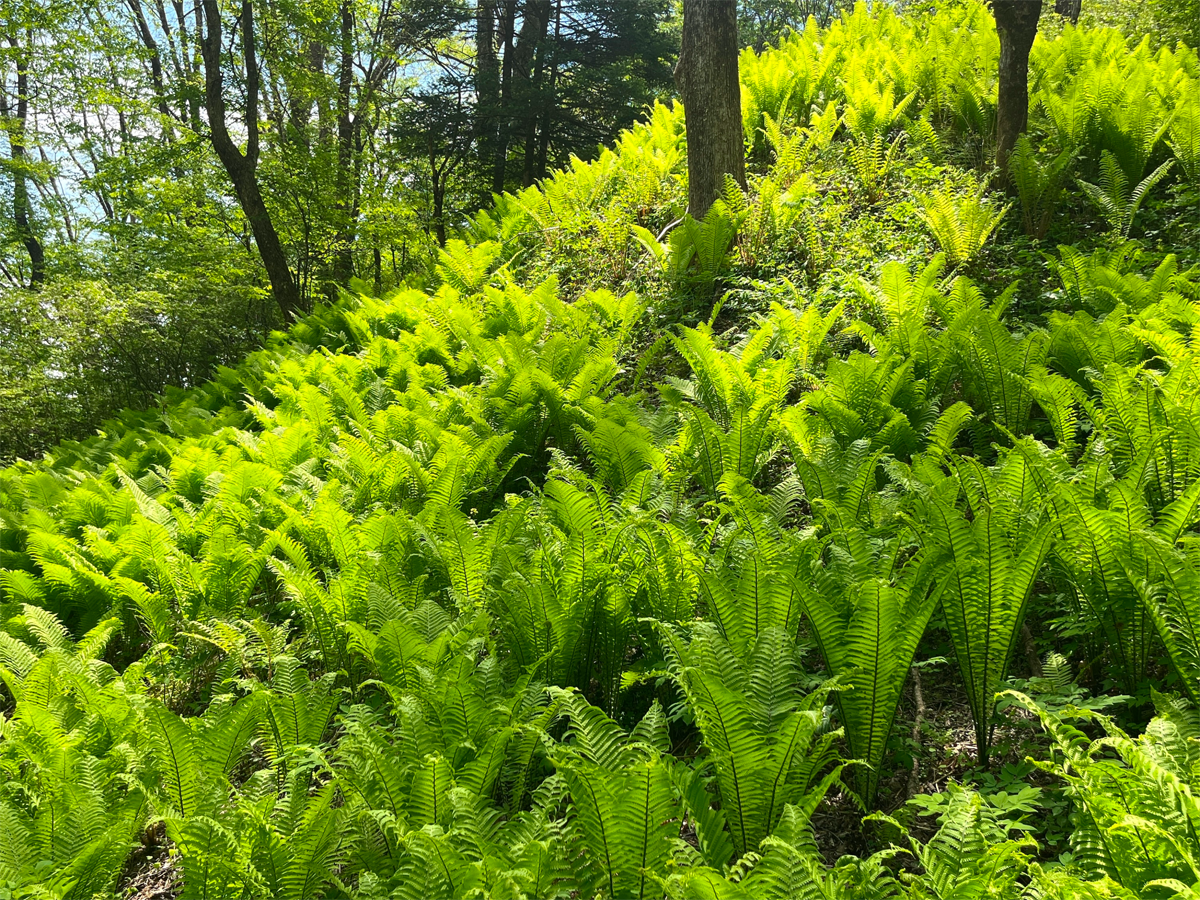
A colony of ostrich ferns on the garden slope
While reshaping the site through deliberate sculptural interventions, Wakabayashi sought wherever possible to preserve the vegetation already growing on the property. Today, the garden is characterized primarily by a woodland of Japanese elms. Around the museum entrance stand katsura trees, while elsewhere the grounds are populated by larches, maples, Japanese walnuts, metasequoias, firs, Japanese yews, dogwoods, and other species.
On the southern slopes, Caulophyllum robustum and various ferns emerge in spring, while large colonies of Sanguisorba hakusanensis flourish in summer, accompanied by scattered stands of cardiocrinum lilies. During the flowering season, the migratory chestnut tiger butterfly (Parantica sita) can often be seen passing through the garden.
The stream that runs through the site originates from Sengataki Falls. In summer, its banks are lined with the yellow blossoms of Ligularia fischeri as well as the white flowers of Japanese angelica and related species. The mosses that carpet much of the garden consist primarily of haircap mosses and sphagnum mosses, together with several other varieties. On the northern slopes, dwarf bamboo appears in spring, while Japanese knotweed and wild thistles become prominent in summer. Numerous other wildflowers bloom throughout the year, though at times the luxuriant growth of grasses can obscure them from view.
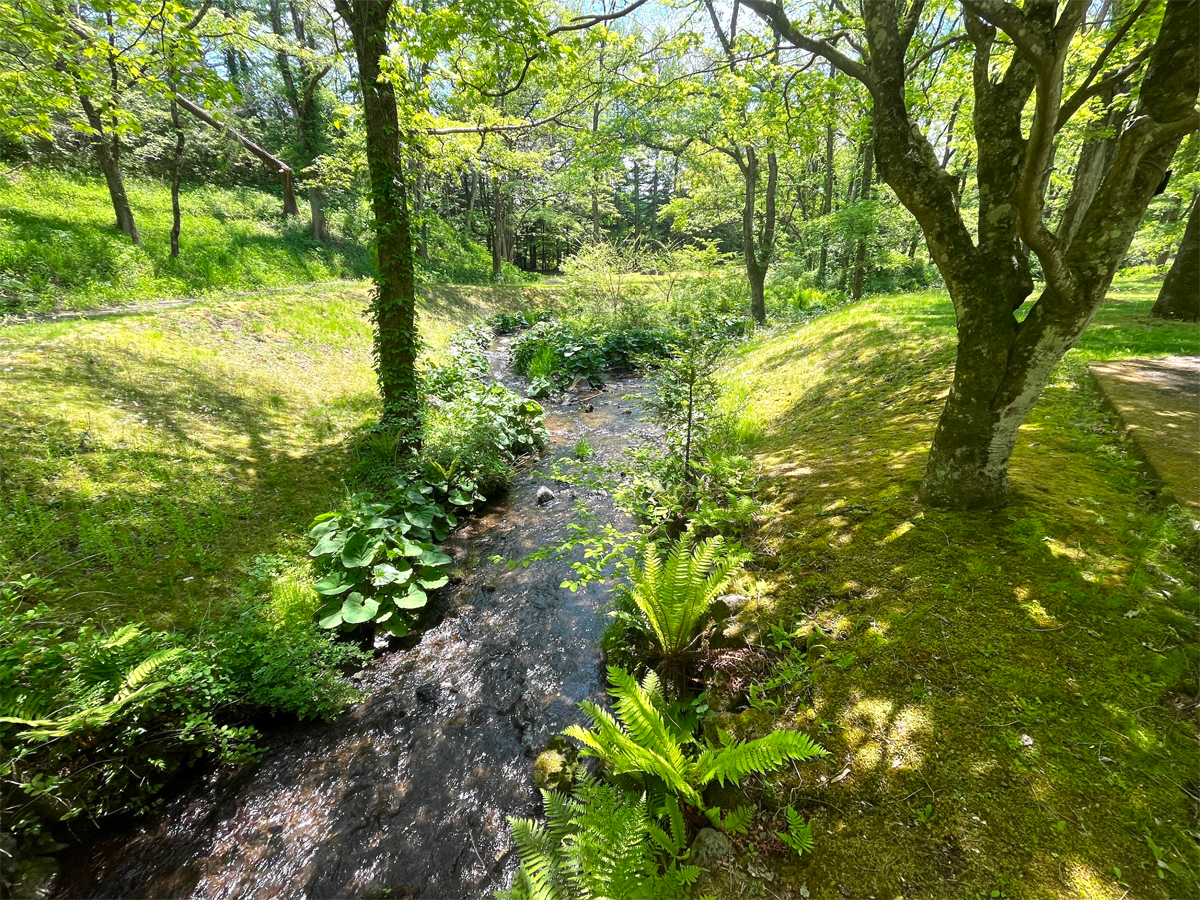
A stream flowing through the garden
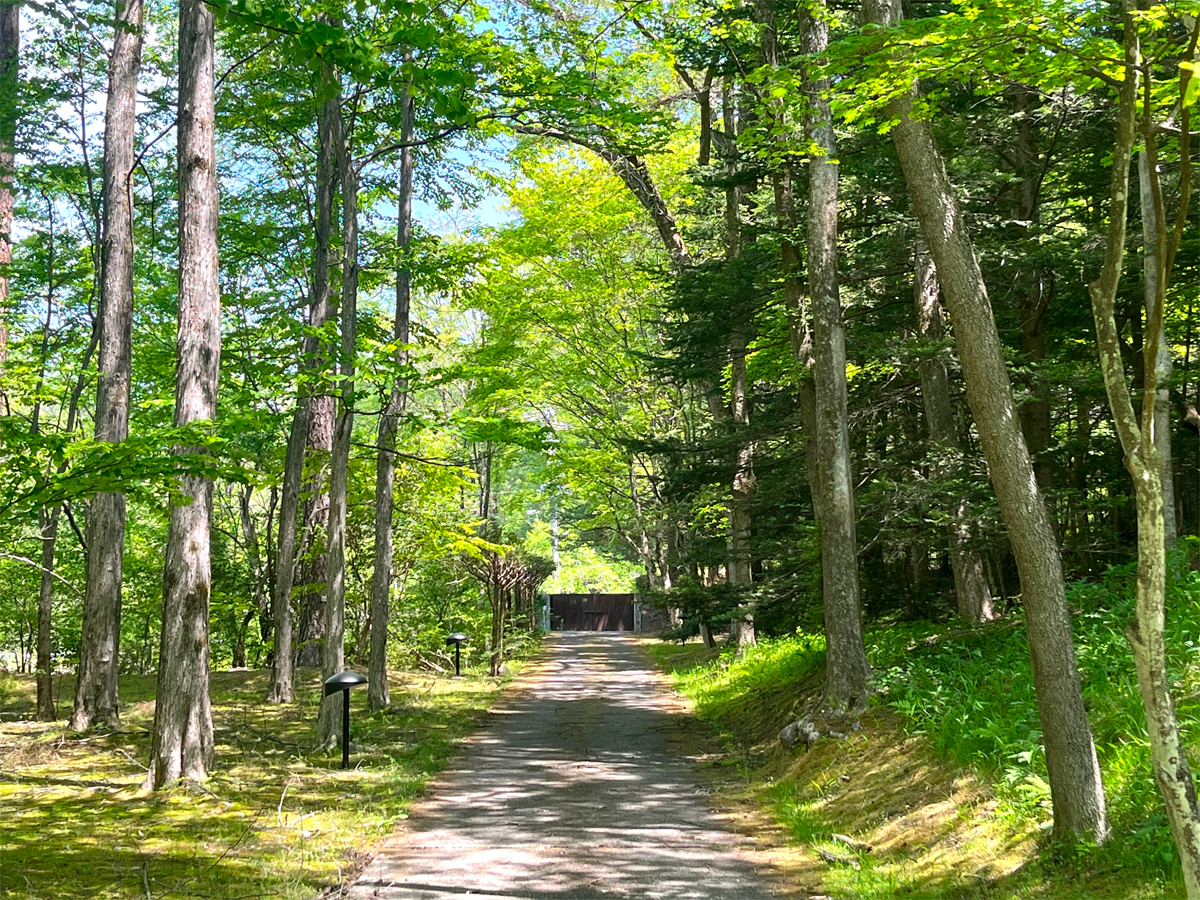
Path leading from the garden to Iron Gate
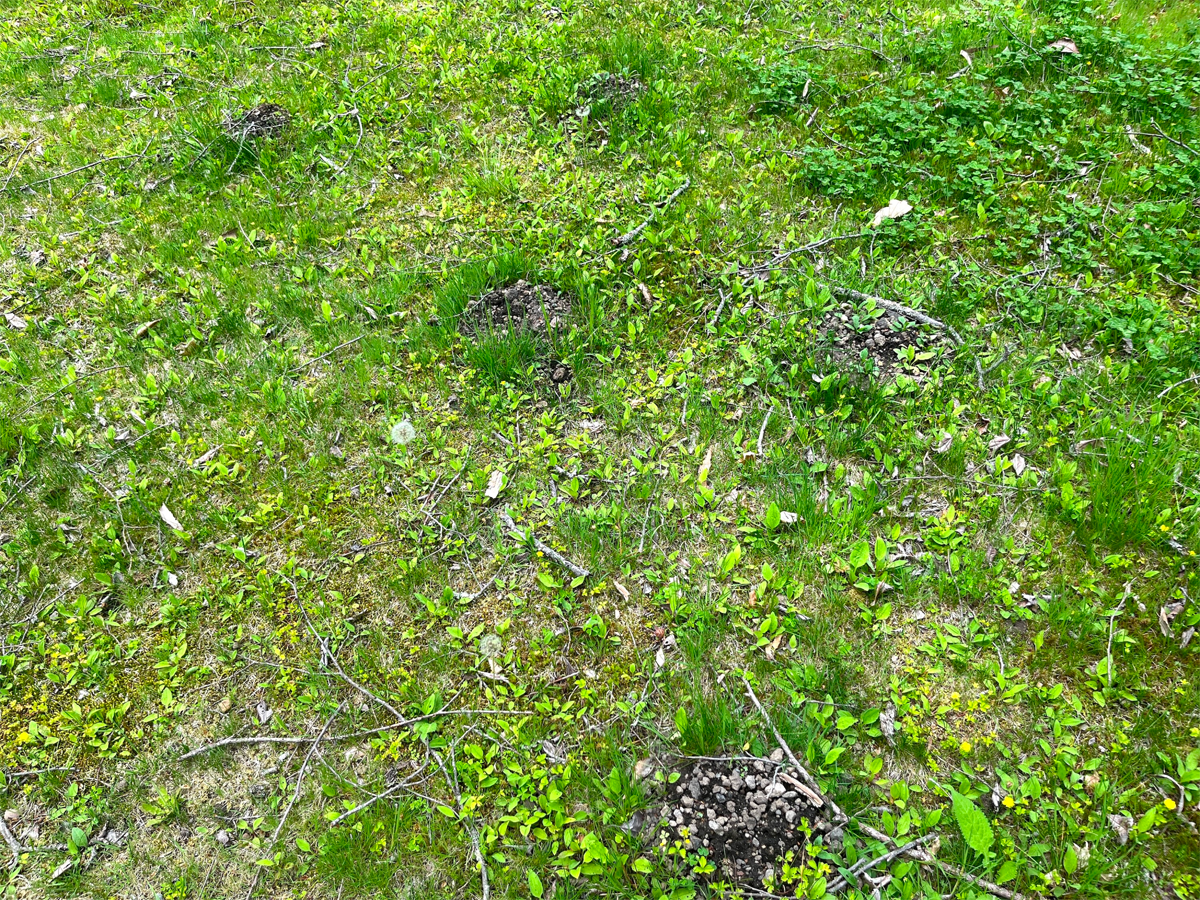
A plateau bearing traces of badger digging
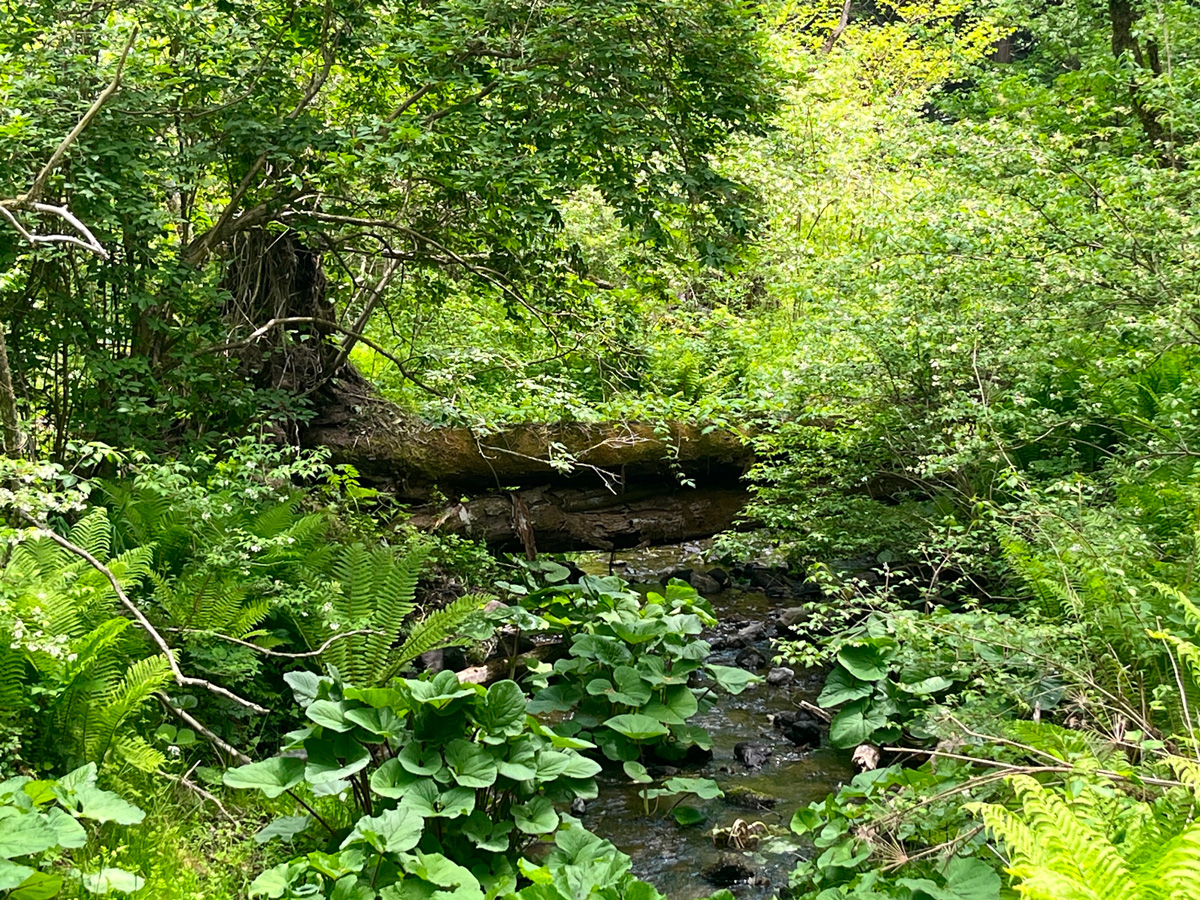
A large tree felled by a typhoon
Wakabayashi’s garden, conceived as an extension of the foothills of Mount Asama, became a monumental sculptural landscape that revealed the site’s underlying topography through the shaping of valleys, depressions, and slopes of varying angles. As he envisioned it, “Only when sunlight and rain fall upon it, when moisture and the distinctive mists of this region linger, when leaves accumulate, and when the colors of seasonal vegetation fill these hollowed spaces, can a ‘contemporary garden’ truly come into being.”*13
Because the vegetation was still immature at the time of completion, Wakabayashi believed that the garden would not reach its full expression until approximately three years later. The metasequoias planted then have since grown into towering trees, while countless plants have continued their cycles of growth and decay, transforming the garden year by year.
Seen from the present, the vision realized here some forty years ago appears almost prophetic in anticipating contemporary concerns with coexistence between human activity and the natural environment. Unconstrained by prevailing assumptions and always directed toward what lay beyond them, Wakabayashi’s perspective continues to shape this landscape. As the garden of a museum of contemporary art, it will no doubt continue to reveal new vistas and meanings in the years to come.
Rieko Sakamoto (Curator, Sezon Museum of Modern Art)
- See note 1.
Garden Tour: Sculptor Isamu Wakabayashi and The Garden of the Museum of Modern Art, Seibu Takanawa, Karuizawa
Lecturer: Shogo Yamamoto (Representative, Seisaku Bijutsu Kenkyusho Co., Ltd.)
Time: 2:00 p.m.–
Schedule
August 7, 2021 — 15 participants
September 4, 2021 — 16 participants
October 9, 2021 — 29 participants