






USAMI KEIJI
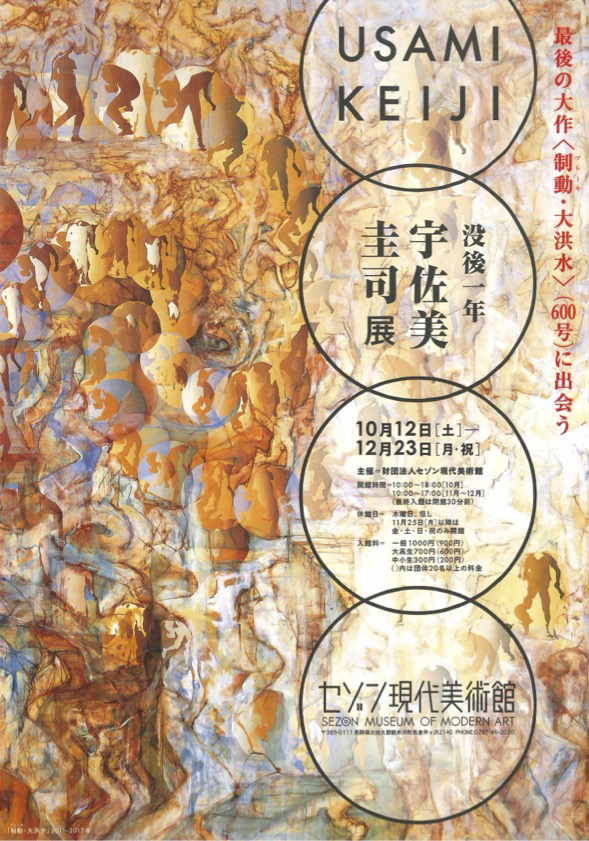
Born in Osaka in 1940, Keiji Usami moved to Tokyo immediately after graduating from high school to pursue a career as an artist. At the age of twenty-three, he held his first solo exhibition at the legendary Minami Gallery. He subsequently represented Japan at the Paris Biennale in 1967, served as Artistic Director of the Steel Pavilion at Expo ’70 Osaka, and represented Japan at the Venice Biennale in 1972, establishing himself as one of the leading figures of his generation.The origin of his artistic practice can be traced to photographs of the Watts riots in Los Angeles published in Life magazine in 1965. From these images, Usami extracted four human figures—running, crouching, squatting, and throwing stones—and resolved to use them as the basis for all of his subsequent works. Reflecting on twenty-five years of this sustained commitment, Takashi Tsujii (Seiji Tsutsumi) wrote: “Why is he so ascetic? Surely because he refuses to sing. A man gifted with the richest of melodies imposed upon himself a prohibition against song.”Even after another twenty years had passed, until his much-lamented death in October of the previous year, Usami never wavered from that commitment. In his later years he wrote: “I did not become a painter simply because I liked painting. I enjoyed drawing, but that was different from the consciousness of participating in history. I consciously chose my own way of life.” These seemingly restrained words may themselves have been Usami’s song. Perhaps his paintings were, in fact, a rigorously disciplined yet deeply conscious means of giving voice to that song. Standing before his final monumental work, Brake Big Flood, we invite you to pause and listen closely.
- Venue
-
The Sezon Museum of Modern Art
- Dates
-
October 12–December 23, 2013
- Organizer
-
The Sezon Museum of Modern Art