






of Art, Tokyo
Hisao Domoto
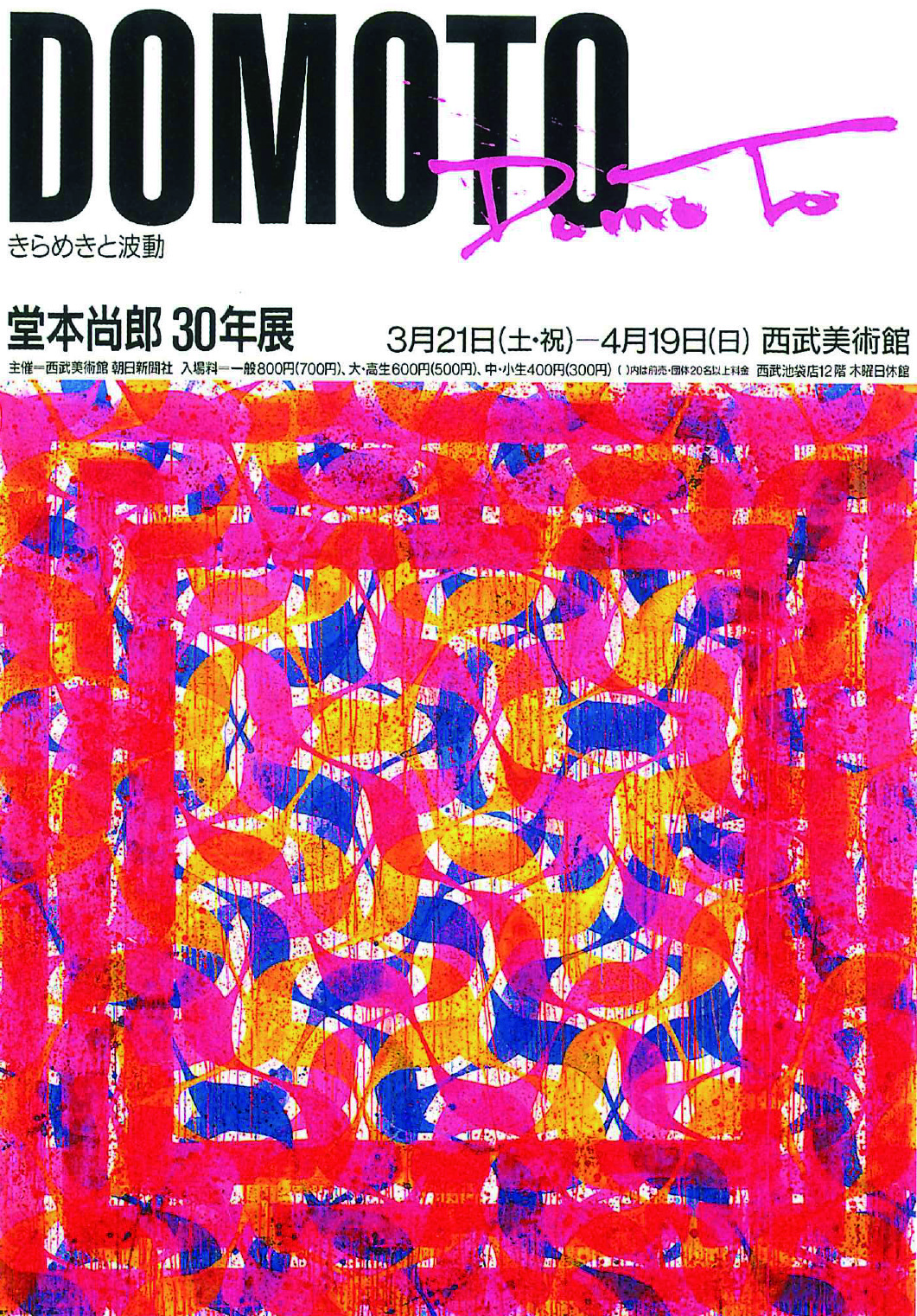
After Hisao Domoto moved to France in 1955, the postwar art world was shaped by the major currents of abstract painting, including American Abstract Expressionism—introduced through exhibitions at the Seibu Museum of Art—and Art Informel, the French movement championed by Michel Tapié from the late 1940s through the 1950s. Alongside artists such as Antoni Tàpies, Georges Mathieu, Sam Francis, and Pierre Soulages, Domoto was at the center of the Informel movement, while developing a distinctive artistic language that incorporated techniques and sensibilities rooted in his background in Nihonga (Japanese-style painting).
This retrospective brought together 69 representative works borrowed from museums and private collections throughout Japan, tracing the full scope of Domoto’s career—from his early Informel paintings and heavily impastoed works to his explorations of the circle motif and his most recent wave paintings. Domoto had previously participated in the inaugural exhibition of the Seibu Museum of Art, A View of Japanese Contemporary Art (1975). The Sezon Museum of Modern Art systematically holds a group of twelve works dating from the 1960s through the 1980s, including Peinture 60–20 (1960) and Trois Carrés (1986), both of which were featured in this exhibition.
- Venue
-
The Seibu Museum of Art
- Dates
- Organizer
-
The Seibu Museum of Art, The Asahi Shimbun
- Touring Venue
-
The Seibu Museum of Art, Ohara Museum of Art, Kurashiki